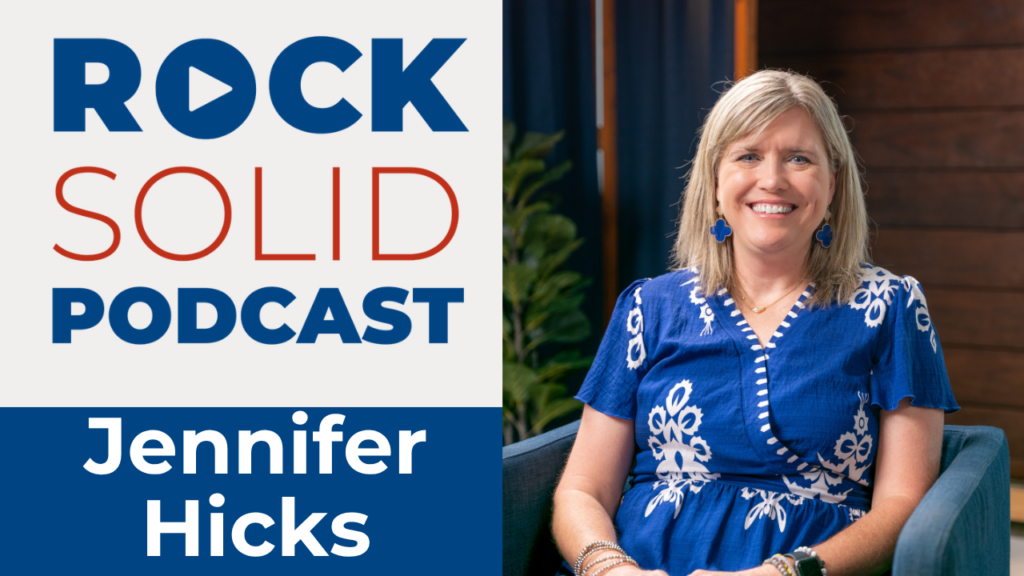
Everybody in her profession was trying to get bigger. Jennifer Hicks wanted to get smaller. After 28 years as a counselor, 20 of them at a group practice that grew from two or three counselors into a multi-level operation, she felt a tug toward something different. She says her whole field is built around growth, and that growth is good and needed. Her heart wanted the opposite: fewer layers between her and the person she was counseling.
She did not plan the way out. She went looking for an office to rent and asked around, including at Palm Valley Lutheran Church, where she had connections through her own church and her father, a pastor. The church did not want to be a landlord. It offered a grant to get her started and asked her to do it as a nonprofit. Her reaction, in her own words: “uh, what?”
Here is the part worth borrowing. For her, the nonprofit is not a sacrifice. It is the mechanism. Many counselors offer a sliding scale to 5 or 10 percent of their clients. Hicks wants to reach more than half, as funding allows. The structure also lets her run Streams in the Valley Counseling as openly faith-based, and keeps her out, for now, of an insurance world she calls a nightmare.
The center opened to clients in January 2025, in a former parsonage at the front of the Palm Valley Lutheran campus off Highway 79. It is one counselor, a part-time bookkeeper, and a volunteer board. She has lived in Round Rock for more than 20 years and says the thing that has not changed is the people. Near the end, she explains how the Round Rock business community can help. Her answer, at 28:40, starts with something other than a check (however if you chose to donate you can).
What would you build if bigger were off the table?
Key Takeaways From This Episode
- Smaller can be the strategy. After 20 years inside a growing group practice, Hicks chose to downsize toward client-focused care while the rest of her field chased growth.
- Let the structure serve the mission. Nonprofit status lets her aim reduced fees at more than half of her clients, well past the 5 to 10 percent many counselors offer.
- Ask for one thing and be ready to hear a bigger answer. She asked a church for office space. It came back with a grant and a different way to run the business.
- Say who you are for. Hicks wants to serve church workers and their families, and clients who want a faith-based fit. She tells people she is not the right fit for everybody, and she refers out when a match is wrong.
- In Round Rock, connections count. A new, small nonprofit often cannot get foundation money right away. Hicks has already presented to the Round Rock City Council and received a small Community Development Block Grant from the city, and her first ask of the business community is introductions.
My heart was just like, I really want to just zoom back down to client-focused, personal care.
Jennifer Hicks, Founder, Streams in the Valley Counseling
Everybody wants to be heard. Everybody wants to be valued. Everybody wants to know that they’re not alone and that they have somebody there to support them.
Jennifer Hicks, Founder, Streams in the Valley Counseling
I’m not the perfect fit for everybody, and I’m not trying to be that.
Jennifer Hicks, Founder, Streams in the Valley Counseling
Episode Chapters
- [00:00] Meet Jennifer Hicks: The host introduces the founder of Streams in the Valley Counseling.
- [00:36] The Old Parsonage Off Highway 79: Where the center lives and why so many Round Rock drivers have passed it.
- [01:56] Twenty-Eight Years In: What keeps a veteran counselor going, and how a Texas Tech psychology student found her calling.
- [04:09] The Tug She Could Not Name: Why she wanted to downsize instead of upsize.
- [06:10] A Church Says Make It a Nonprofit: The grant, the board, and the surprise change of direction.
- [08:27] Why Nonprofit Changes Who Can Afford Counseling: Reduced fees beyond a standard sliding scale.
- [10:05] Faith-Based on Purpose: The courage to hang the shingle and say what the center is.
- [12:49] How People Choose a Counselor Now: Fit, trust, and why ministry families look for someone who gets it.
- [15:08] The Starfish Rule: Why doing your part is enough to keep going.
- [17:06] A Safe Place for Ages 10 to 95: Who walks through the door and what they all want.
- [18:32] What Has Not Changed in Round Rock: Twenty years of people, schools, and traffic.
- [21:03] Anxiety, Burnout, and Notifications: What clients are carrying into the room today.
- [24:11] What She Hopes For Next: Why asking for help, and giving grace, comes first.
- [28:40] How to Help a Small Nonprofit: Her ask of the Round Rock business community.
Frequently Asked Questions
What is Streams in the Valley Counseling?
Streams in the Valley Counseling is a nonprofit, faith-based counseling center in Round Rock, Texas. It sits in a former parsonage at the front of the Palm Valley Lutheran Church campus, just off Highway 79. Jennifer Hicks formed the nonprofit in July 2024 and began seeing clients in January 2025. Learn more at streamsinthevalley.com.
Why did Jennifer Hicks start a nonprofit counseling center instead of a private practice?
She wanted to downsize toward client-focused care after about 20 years at a growing group practice. When she went looking for office space, Palm Valley Lutheran Church offered a grant and asked her to do it as a nonprofit. The structure lets her offer reduced fees to a larger share of clients, apply for local grants, and run as a faith-based center.
Does Streams in the Valley Counseling offer reduced-fee counseling?
Yes. Hicks says her goal is to offer reduced fees to more than half of her clients, as funding allows, compared with the 5 to 10 percent many counselors can offer. The practice offers both reduced fees and private pay. Call or text (512) 265-6411 for current rates and availability.
Who does Jennifer Hicks counsel?
She sees children, teenagers, and adults, with current clients ranging from about 10 to 95 years old. Her main topics are anxiety, depression, grief, and life transitions. She has a special interest in serving women, church workers, and their families.
How can Round Rock business owners help a small nonprofit counseling center?
Hicks says the first thing is connections: introductions to people who care about the mission. Funding matters too, since new nonprofits like hers often cannot get foundation money right away. Reach her at (512) 265-6411 or streamsinthevalley.com.
About Jennifer Hicks
Jennifer Hicks is the founder and counselor at Streams in the Valley Counseling in Round Rock. A Licensed Professional Counselor, she has counseled for 28 years. She grew up in small West Texas towns as the daughter of a pastor, studied psychology at Texas Tech, and has lived in Round Rock for more than 20 years. She formed the nonprofit in July 2024 and began seeing clients in January 2025.
Connect: streamsinthevalley.com | Instagram | Facebook | Call or text (512) 265-6411
More From Rock Solid
If this episode resonated, hear Monica von Waaden on Leading an All-Volunteer Army and Jenn McPeak on Recovery Over Hustle. Monica leads a nonprofit powered by volunteers. Jenn built a business on the idea that rest beats grinding. Browse all Round Rock nonprofit leaders or more health and wellness conversations.
Watch or Listen
Full Episode Transcript
Click to read the full transcript
Auto-generated captions, lightly cleaned for readability. Speaker labels are not included, and unclear names are marked [unclear].
Welcome to Rock Solid, the Round Rock Business Leaders podcast. Join your host, Bryan Eisenberg, as he explores the journeys of entrepreneurs and companies across Round Rock, Texas. From startups and nonprofits to large organizations, each guest shares their passion for doing business in this thriving community. Let’s dive in. Hi everybody, it’s Bryan Eisenberg and welcome to Rock Solid. We are very excited today to be joined by Jennifer Hicks. thank you so much for coming here today. I have I have a bunch of different directions cuz you’re in one of the most iconic spots in Round Rock and I kind of want to start there.
From a physical location. Sure. to tell us what you’re doing in this historic building. Yeah. So, I just started a nonprofit, counseling center, mental health counseling center, in the front of the campus of Palm Valley Lutheran Church, right off of Highway 79, just down from Kalahari before you get to Dell Diamond. So, yeah, it’s a it’s a great stretch of land and pretty much everybody’s driven by it at least once, I’m sure. Yeah. So that’s what you’ll see, you know, the Palm Valley Lutheran Church sign and we’re at the very front of their campus in an old it was their old church parsonage where pastors and their families used to live.
And so they’re repurposing that house. they’ve had another nonprofit that’s been there officing in there for a couple decades. and then about almost two years ago we opened our nonprofit called Streams in the Valley Counseling. So yeah. Well, that’s what I want to dive into because, you know, I was a formal social worker. I was I was studying for my MSW when my brother said, “Hey, would you want to go into business together?” And I said, “Yes.” and you know, so I was in social work for a few years, but you’ve been in counseling for 20 28 years.
It’s a very hard job. You know, it is hard to keep the boundaries to, you know, take all the weight of all these other people. what keeps you going at it for so many years and not only you know you were doing it as as your job but then to say hey you know what no I’m going to become an entrepreneur and start my own nonprofit and like how did how did you get there? How do you do it every day?
I’m still not sure okay how I got here. but I do I worked part-time as my I’m married and my husband and I were raising our kids. I was kind of I wanted to always have my foot still in the door to be a counselor. felt a passion to do that from an early age, even though in high school I didn’t know what I wanted to do. but went into psychology at Texas Tech. Okay. and so I thought, I’m going to figure out what I want to do there.
And, the way I came about knowing that I wanted to be a counselor was working as a secretary for a counseling center in Lubbock. Okay. just kind of have a part-time job and try to understand what a counselors actually do. and then I was like absolutely this is what I want to do. my dad was a pastor and so our family was always about community and church and helping other people, hearing about other people. You know, we had our own family, my sisters and I and my parents and then our church family, our community.
Yeah. I was from small towns in West Texas and so you know the whole community was our extended family. but so I worked part-time in different counseling centers over the years. and my husband was able to be the main provider and I was able to be kind of a stay-at-home mom and part-time counselor. and then I was at another center for about 20 years. they had started out with just two or three of us and grew to a big group practice multi-level and over the years after 20 years of being there I just felt a tug in my heart like they are wonderful people they’re a wonderful group but I’m at a different stage of life and different wanting to pursue something different I just didn’t know what it was and I talked to a lot of different counselors that were in private practice and other group practices is my counseling center is faith-based and so in the Christian counseling world talking to a lot of different practices and was like you know God I don’t want to do private practice I don’t know how to run a business and I don’t want to have to be the only one to do all that I just want to counsel people and I just want to I wanted to downsize instead of upsize everybody else is I think everything is about trying to grow your practice and get big and that’s needed and that’s good But my heart was just like I really want to just zoom back down to client focused personal care and that’s kind of how I got here.
Then I was after talking to a lot of counselors they were like yeah we need other people in private practice and there is a need that you can do it. and so that was so encouraging and giving me ideas from practical how to get set up kind of things to networking and things like that. but it was really just my faith that I was like, “Okay, I don’t know what you’re doing, God, but I hear that you’re telling me to do something different.” And that’s when my I kind of went around trying to look for just an office space because I was like, “Okay, I’ll I’ll do private practice.
I got you. This I’m ready for a change.” and our our kids one is in college and one is in high school a senior now in high school and so I’m at that phase of starting to y you know kids are flying out of the nest and back and forth and so I wanted a place to put my energies and my heart and my passion and have time now you know when they drive and they’re in college and they’re in high school you have a lot more time and so I I was just looking for an office space and with my dad was a pastor had lots of different connections with different people and men my own church and so one of the places that I asked was Palm Valley Lutheran and they were like well we don’t really just want you to rent, you know, an office space or something.
We want to give you this endowment, this grant to get you started and we want you to do it as a nonprofit. Okay. And I was like, what little change of direction, but yeah, that’s that’s phenomenal. Yeah. So, so we got together a board of directors and formed in July of 2024 and then got our nonprofit status and fortunately had the seed money and figured out, you know, all the different ways to go about doing that and use an attorney and get set up and and then I started seeing clients in January of 2025.
So, we’re really just in our second full year of seeing clients. And I say we because it’s me and my board. and it also, you know, amazes me. I’m like, all these people are volunteers and they’re helping and they’re working so hard for this mission and for me and supporting me. So, it was a wonderful blend that I never would have looked for or tried to do. because I’m not alone in doing it and I have you know the funding was the initial funding to get us started and to you know let us actually do it.
And to be a nonprofit then gives us the ability to apply for local grants to do fundraisers to get donations and to have other partnerships as well as just like the nonprofit world is completely new to me working in it. I’ve volunteered and all those kinds of things, but just all the benefits there are too to being a nonprofit. as well as the hard work. I say I love it and it’s really hard and it’s a huge learning curve. So I started an association.
So I understand that, you know, it’s not quite as challenging, but it was definitely a lot of work. because you’re a nonprofit, you also operate differently to serve the community in a different way. Yeah. why did you feel that was such a need and explain the need for the community who’s listening? Absolutely. Yeah. And it is a different kind of concept. there is now that we’ve done this I’m now discovering there are a lot of different counselors and areas across the United States that are turning to becoming a nonprofit for different reasons.
The reason for us was so part of it was so that we could offer reduced fees in a more substantial way. many counselors do you know try to do you know a sliding scale 5% 10% of their clientele or whatever it is that they are able to handle within their business framework. And our desire was that you know our goal is that we could get over 50% or whatever higher number you know that we have funds for. and so part of that is making counseling more accessible, more affordable to people.
And so that’s a huge part part of the way we have different payment plan offers. so I have clients that are private pay. so just it’s run like a just a regular professional counseling center. but being a nonprofit allows us to be able to get those funds and to run at a at a higher level of reduced fee clients to make that the other part of being a nonprofit gives us the freedom and the flexibility to run as a faith-based counseling center.
Not everybody, you know, wants that. Not everybody needs that. Not that’s not a good fit for everybody, but there are a lot of people that want that. and a lot of people in the Round Rock community, I think at one point I saw like over half, you know, are faith-based, wanting that Christian type counseling or finding that fit. And so, you know, part of it was I felt God saying like don’t be afraid, have the courage to be, you know, hang your shingle up and be faith-based and being nonprofit.
Doing that. U, so, so the faith-based part is part of being nonprofit. you can be faith-based obviously, yeah, not being nonprofit and in any type of center, but the other part was business-wise, you know, the other reason I wanted to kind of downsize was to to make things simpler for me and something that was also which is very ironic that all the amount of work in getting set up as a new business and a nonprofit, but my heart’s desire was also to make it fit for myself as a counselor so that I wouldn’t be burned out and that I could get compensated and could contribute to my family you know especially you know as they grow and needs are changing and college and all that and with that level of experience and counseling that I could be compensated and that I could get at least for now out of the insurance world that was becoming a bit of a nightmare a nightmare and stress and so I was like how can I still provide quality and to have the ability for clients to find me?
To know that there’s that common ground of being faith-based with your counselor to make sure you’re a good fit. and then to have to have the ability to offer those reduced rates. Yeah, it’s I mean I had somebody this past week in one of the Facebook groups that we’re very active with if you’ve ever heard parenting aging parents it’s group started by locals Kim Mike Barnes for people who are dealing with their aging parents and you know the sandwich generation and literally someone asked this week looking for a faith-based counselor.
So one of my one of our Round Rock Chamber ambassadors is a faith-based counselor. I suggested him obviously now I have another one I can point to as well but yeah to people looking for it I’m curious because you know obviously you grew up you know as as a child of a pastor you’ve been in counseling for you know nearly 30 years now and you’re going through a different period of your life. What has what has changed in how people are seeking that counseling today?
Counseling is a very vulnerable personal thing that people seek and so it is really important for them to find a good fit counselor. and it’s hard to kind of know. I mean we all have our websites, we all have our different, you know, Psychology Today profiles, all the things. but to really, you know, get to talk or, you know, we, most of all of us will offer the free 15-minute consultation or things like that to kind of get an idea. But, you know, people are wanting there are a lot of different options and they’re wanting to kind of understand, you know, what they want to invest their emotions and their, you know, their trust in.
And so being able to to have that as faith-based. The other part that I feel passionate about is having a place for people, church workers and their families to get counseling. and sometimes they’re wanting somebody that is either worked with a lot of people that have been in ministry or their family members or that have an experience personally too of being a preacher’s kid or being within that personal experience as well as professional. And so, to give them that because that’s part of like I can’t help and change and be there for everybody, but I can do my little part.
And so I know by helping any person, whether that’s a mom, that it’s helping her in her parenting, and her marriage and her work or whatever else other areas that she’s in, and by helping somebody that’s working in the ministry that’s helping them to do their job. and to be there for their people, but to take care of themselves as well. so I you know, we all see everything that’s going on in the world and we all see bad stuff and we all hear all the news.
And it’s easy to get cynical. It’s easy to get overwhelmed. but it’s also really simple to do your part and just, you know, the first, I think, gift I was given as a counselor was the little saying or whatever it was about, you know, the little boy walking on the sand on the beach and picking up all the starfish and putting them back in the ocean. And, you know, somebody’s like, “There’s so many, you know, you’re not you’re not going to make a difference.
You’re not going to make a dent.” and he was like, you know, he or she, whoever that kid was, like, but it makes a difference to that one that I just put back and this next one and this next one, and they may help somebody else, you know. So, that’s kind of been you know, something that drives me, whether I was seeing a handful of clients while I was raising kids over the years or two handfuls of clients number-wise or whether, you know, I’m building a practice now.
The being able to just and to meet people like we were saying earlier like I’ve lived in Round Rock over 20 years and we’ve raised our kids here and we go to church here, we volunteer here, we you know, all the things. but there’s still so many people that I don’t know and doing this job you know means networking and marketing and also means you know philanthropy and trying to make donor relations and all the things and it’s so heartwarming and inspiring that there are so many people doing their part to do good in our community which reaches into the world and whether that’s in your own home whether that’s you know a bigger you know wider influence that you have or wherever you are, whatever you’re doing.
So I’m kind of like, okay, this is where God has me right now. And and I like it. I like it when people come into the office and can say, you know, I feel comfortable and I see the intention and the care that you put in even just, you know, decorating on a very minimal budget with, you know, Facebook Marketplace finds or whatever it is like. and that’s what I wanted just to be, you know, a safe place for people to come.
Whether they’re, you know, in crisis or whether they’re just in ordinary life that is a different season of life that they’re changing. They’re, becoming a parent, they’re parenting teenagers or their kids are leaving the nest or they, you know, are going through not being able to be a parent or, you know, all the things or aging parents and that sandwich generation. I’ve I see kids as young as 5 years old, teenagers and adults, and I’ve actually now I see more adults.
And I’ve kind of I don’t specialize in it, but I suddenly have a lot of senior clients and so I have clients from, you know, right now probably 10 years old to 95 years old. Wow. and so everybody wants to be heard. Everybody wants to be valued. everybody wants to know that they’re not alone and that they have somebody there to support them. so I probably got way off track of your question there and you can No, no, it’s great. I want to circle back a little bit to something you said because, you know, you did come from a smaller town and we found out, you know, you and [unclear] have some interesting connections like, you know, against [unclear], West Texas, right, in West Texas, but you came from West Texas.
You’ve been here for 20 years and this city has changed a lot in the last 20 years. to the point where sometimes it can feel more overwhelming. There’s more people, there’s more stress, there’s more things going on. what’s the things that have not changed for you in Round Rock over the last 20 years? And what’s the biggest change that you’re seeing? the things that haven’t changed are people. People I love our neighborhood. that I love are, you know, my kids go to a 6A high school and it’s huge and, you know, I graduated with 50 people.
My husband graduated with 300 and my kids are graduating, you know, with 900 something. So, in that aspect, you know, they’ve had a lot of opportunities. There’s a lot of things to do. Like everybody says, you’re feel like you’re in a suburb, but you’re so close to Austin and there’s plenty of things that are going on in Round Rock. I think I just love the people are, you know, they’re still kind. They’re still good southern hospitality. they, you know, most people care.
Most people you know, are trying to appreciate this one life that we’re given and do their part to help other people. So, I think just people is what I like the most. and that it can still, even as big as it is, it can still have a flavor of small townness. Sure. but I don’t like the traffic and, you know, having kids learn to drive in Round Rock was very different than me learning to drive in, you know, a very, very small town.
I mean, you know, I, you know, grew up in Brooklyn and learning to drive in Brooklyn was a whole different experience. Oh, yeah. you know, and each of my kids driving experience has been different. for my youngest who’s also, you know, a senior now in high school. you know, he’s out driving one of his, jobs or first having his car and he’s driving in from Austin and he’s literally parked at a light and he gets rear ended. Yeah. Cuz the guy wasn’t paying attention.
Yeah. And again, not his fault, nothing he can do about it. Thankfully, he was driving what was my mom’s Volvo. Okay. That my daughter got to help her pick it up off the lot. So that car has gone through all the kids. It’s so I knew he was going to be safe in there. but I think it’s very it’s a great symbol of kind of what’s going on today, right? We got more people distracted, more people overwhelmed, everybody seems to be rushing around.
Are those the kinds of things you’re also hearing people dealing with in those counseling sessions that they’re they’re feeling all of that energy? Yeah, I mean you always have I work, you know, with kind of the main topics and issues, anxiety, depression, grief are the top ones and life transitions. But so you it is a different kind of world in some regards. I mean I think every generation has said that and can say that legitimately in different ways with changes good and bad that have happened in every decade.
But it’s there’s a heightened level of anxiety and burnout and busyness. there’s saturated with notifications non-stop. and our brains and bodies aren’t meant to do that. and it’s good to see so much education and even if it’s social media reels or whatever it is, research and stuff that’s TED talks, you know, that are talking about, you know, being guide and respecting our the way our brains work and our bodies and not just like them not letting them have their cell phones in school this year.
I think it’s great. Yeah. You know, you know, I understand how powerful of a tool it is, but it’s also a powerful tool that distracts and causes anxiety and more comparison. And so, give them a few hours of their brain not dealing with it. It’s a healthy thing. Yeah. To have boundaries. And so, that Yeah, that comes up. and that’s what I was in a workshop at a local church on suicide prevention. And I know September is kind of the month of one of one of the things that it is suicide awareness prevention and it was it was based off of faith-based.
It was at a church and talking with church leaders, lay leaders, staff, counselors, different people and you know it kind of came down to we’re trying to build hope in people and we’re trying to connect people and not you know have community. So hope and community were kind of the two main things that yeah we were talking about and all the different reasons people get to that point of desperation. and you know it can be a multitude of different circumstances or things that happen to them.
It can also be, you know, a buildup of a lot of things and even just, you know, how connected we are and how multitasking we are and the pressure and expectations just also stress our bodies out. And when our bodies are stressed, it’s going to come out in a lot of different ways. And we’re going to try to figure out a lot of different ways to cope. It’s one of why we’re one of the most unhealthy generations ever. I don’t know if you if you read the book, The Anxious Generation.
Yeah. But what an amazing book and the research behind it and how much of an impact you know especially the phones for young ladies but for all generations like you know we’re we are dealing with something you know between big tech and big pharma and big food kind of all attacking you know it’s a stressful life and what a blessing it is to have you know an opportunity now to have a nonprofit where people can go and get counseling as they need it.
What do you hope for as we’re talking about hope that this community could do for you and those who need the counseling over the next 2 three years? I mean first I just hope people seek help through whatever means that is through any counselor any whether that’s a psychiatrist a counselor their doctor you know whatever that is that they can speak up and that is one thing that’s gotten better you know mental health is not as stigmatized and people are willing to say like I need help with this or I need support or so that part has gotten better but Yeah, I mean I think first and foremost to know you’re not alone.
There is help. you know, there’s a lot of different people and what I tell people, I’m not the perfect fit for everybody. and I’m not trying to be that, but I am hoping that the people that are in my niche, you know, especially with women and especially, church workers and their families and all those things, you know, that they can find me or that I’ve worked, you know, in the Austin area over 20 years and was in Westlake and other areas, too.
And so that I also have a lot of different as as a lot of counselors do, we have a lot of different resources that you know even and we’re the first to say like from our end and the client end we want it to be a mutually good fit and if we’re not then we are happy to know here’s you know other resources. So, I think just people getting help people being willing to to be aware of other people that may need help too.
Not even if they’re necessarily all the way to the point of being suicidal, but you know, just to know everybody’s going through something at any given time. and to give people some grace and to give yourself some grace to to share some of that and to just to be there like one of the things I loved about my dad was like he would talk to anybody. It didn’t matter if it was a stranger, if it was somebody in his congregation, if it was and he would just give the time to anybody.
People seem to struggle with with with finding time to be present with people and yeah, that would be make a big difference. I’m curious when you’re not working and not with family and you take the time to decompress, what is it in the area that where you like to go to kind of enjoy that downtime and putting the phone away and all that? I do appreciate I guess the scenery and nature and parks and being from West Texas and then was in Lubbock for a long time and loved all those places, but there’s trees here and there’s lots of different nature places to go and things to do.
And that’s refreshing and you know, we have two dogs and just being able to go on walks and yeah do things like that. and all the things, but being with my friends, my mom lives here too, being with family. And so being able to to connect in those different ways, being able to, you know, participate in what our kids are doing, whatever stage of life, but yeah, I think just being grateful for being, you know, having a lot to do, but also can choose to do nothing.
And I’ve been doing a lot of networking, a lot of marketing this week especially and lately and have some things coming up. And yesterday I was like, “Oh, I get to just see clients today or I think like paperwork sounds pretty good right now.” because I’ve been out of my comfort zone a lot, but I think that’s okay. and I think that’s where growth happens. Yeah. Yeah. So, so I plan to do some Hallmark watching and cuddle up with my dogs this weekend and, enjoy.
My daughter’s a senior, too. So, enjoy things while they’re still home. Yeah. Yeah. Yeah. Well, thank you so much. If if people want to, find you, have any questions, they want to learn about you, connect with you, what’s the best way for them to find you? Sure. So, the office is called Streams in the Valley Counseling. We have a website, streamsinthevalley.com. you can also call me the office number 512-265-6411. the other thing that you know secondary to all the other parts that people can do is just help us get connected.
We are small nonprofit. It’s just me as the counselor. We have a part-time bookkeeper, a board of directors and we’re new and so those aren’t necessarily things that a lot of foundations will fund right away. Y and we’re faith-based. So, you know, but connecting us with people, even we got a small grant from the city of Round Rock Community Development Block Grant. And you know, I never thought I would stand up in front of the city council and say this is who we are and this is what we need.
You know, any kind of connections like that or helping us. if the philanthropy part is very new and so, getting that, getting the funds, I think any nonprofit would say the same thing, like if we could just have the funds and focus on our services and our clients, that’s our heart’s passion. so, you know, anything that could be helpful in that way. but yeah, just I’m happy to get your emails and your phone calls and direct you where you need to be or help if I can be of help.
Awesome. Thank you so much for spending your time with us today. Thank you.