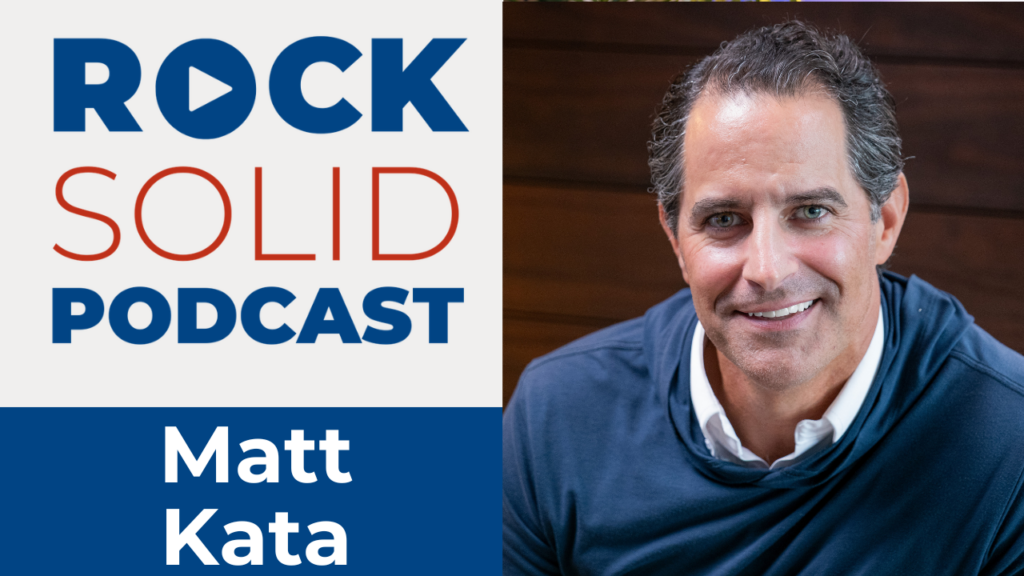
Matt Kata never played the same position two games in a row if the team needed him somewhere else. Over four seasons with the Round Rock Express, Matt Kata played seven different positions outside the battery, one of only three players in franchise history to do it. On August 14, 2026, that versatility earns him a plaque as the 11th member of the Round Rock Express Hall of Fame.
The habit started as a survival skill. When Kata debuted with the Arizona Diamondbacks in 2003, a teammate named Tony Clark had a name for guys like him: “the significant others.” Not the stars, not expendable either, just essential wherever the lineup card needed a hole filled. Kata could have resented the label. Instead he leaned into it so hard he ended up as an emergency catcher warming up bullpens, a job nobody drafts a middle infielder to do.
That same instinct put him at second base on May 18, 2004, for one of the more remarkable defensive performances few people remember: Randy Johnson’s perfect game. Kata made three assists in the seventh, eighth, and ninth innings, the exact stretch where a defense usually starts thinking about the no-hitter instead of the next ground ball. His fix was almost embarrassingly simple. He repeated four words to himself, over and over, for three innings: hit it to me.
Round Rock is full of people who play seven positions for a living: the office manager who also does the books, the plumber who is also the dispatcher, the nonprofit director who is also the grant writer. Kata’s second career, as a commercial lender at R Bank‘s Georgetown branch, runs on the same principle he used as a ballplayer. Character shows up in how someone handles the job nobody wants, not just the job they signed up for.
Where in your business are you still waiting for the “real” position to open up, instead of making yourself the person the whole operation depends on?
Key Takeaways From This Episode
- Versatility beats specialization when the goal is longevity: Kata’s willingness to play seven positions, and catch bullpens nobody assigned him, is what kept a big-league jersey on his back. The same rule applies in a small business. The person who can do the job nobody wants is the one who becomes irreplaceable.
- Control what’s actually yours to control: Kata built his entire coaching philosophy, and now his parenting, around three words: attitude, concentration, effort. He calls it ACE. Everything else, including who gets promoted or which loan gets approved, is noise.
- Character is the collateral that matters most: As a commercial lender, Kata says character tops every other factor in the five C’s of credit. It’s the same read he used to judge a teammate.
- Round Rock businesses run on “significant others”: The people who make an organization work are rarely the ones with their name on the building. Kata’s career is a reminder that being essential is a better long game than being the star.
I knew being versatile was what would keep a jersey on my back and keep giving me those opportunities, so I embraced it.
Matt Kata, VP, Commercial Lender at R Bank
Those are the three things I can control, in life and on the baseball field: attitude, concentration, and effort.
Matt Kata, VP, Commercial Lender at R Bank
Character is the biggest thing, certainly on the lending side, because you’re lending people money.
Matt Kata, VP, Commercial Lender at R Bank
Episode Chapters
- [00:00] The Hall of Fame Announcement: Bryan opens with the news that Matt Kata is entering the Round Rock Express Hall of Fame, and why the honor fits a career built on adaptability.
- [01:16] The Significant Other: What teammate Tony Clark’s nickname for bench players taught Kata about being essential without being the star.
- [04:08] Choosing Vanderbilt Over the Draft: Why Kata turned down his first shot at pro ball for a longer-term bet on himself, and the three phrases his father repeated that shaped that decision.
- [08:37] Inside Randy Johnson’s Perfect Game: The mental mantra Kata used to stay present at second base during one of baseball’s rarest achievements.
- [14:09] Where Youth Sports Coaching Goes Wrong: Kata’s take on win-at-all-costs coaches, and what real player development actually requires.
- [22:54] Building ACE: Attitude, Concentration, Effort: The three-word framework Kata has carried from his own playing hat to his son’s.
- [25:45] Character Over Collateral: How the same read that made him a good teammate now shapes how he evaluates loans as a banker.
- [29:34] Finding Home in Round Rock: Food poisoning, an All-Star Game, and meeting his wife: how a road trip turned into roots.
Frequently Asked Questions
Who is Matt Kata?
Matt Kata is a former MLB utility infielder who played parts of six major league seasons with the Arizona Diamondbacks, Philadelphia Phillies, Texas Rangers, Pittsburgh Pirates, and Houston Astros. He spent four seasons with the Round Rock Express and now works as VP, Commercial Lender at R Bank‘s Georgetown branch.
How many positions did Matt Kata play for the Round Rock Express?
Kata played seven different positions outside the battery during his four seasons in Round Rock (2009 to 2012), making him one of only three players in franchise history to do so. He also holds the franchise record for hit-by-pitches (42) and sacrifice flies (19).
What is Matt Kata’s “ACE” philosophy?
ACE stands for Attitude, Concentration, and Effort, the three things Kata believes are always within a person’s control. It started as a reminder on his game hats as a player and now shows up on his son’s hat, in his son’s own handwriting.
Was Matt Kata on the field for a perfect game?
Yes. Kata played second base for the Arizona Diamondbacks during Randy Johnson’s perfect game on May 18, 2004, and made three assists in the seventh, eighth, and ninth innings.
When is Matt Kata inducted into the Round Rock Express Hall of Fame?
Kata is inducted on Friday, August 14, 2026, before Round Rock’s game against the Sugar Land Space Cowboys, becoming the 11th member of the Round Rock Express Hall of Fame.
About Matt Kata
Matt Kata is VP, Commercial Lender at R Bank‘s Georgetown Banking Center. He played fourteen years in professional baseball, including parts of six major league seasons with the Arizona Diamondbacks, Philadelphia Phillies, Texas Rangers, Pittsburgh Pirates, and Houston Astros, four of them as a Round Rock Express infielder and outfielder. After baseball, he ran youth baseball and softball development for the Cleveland Indians before moving into banking in 2021. On August 14, 2026, he becomes the 11th member of the Round Rock Express Hall of Fame.
More From Rock Solid
If this episode resonated, hear What a Baseball Clubhouse Taught Hunter Leatherman About Everything That Matters and Kim Pollok on Going from Layoff to CEO by Saying Yes, both guests who turned a setback into the long game. Browse all Rock Solid Leaders.
Watch or Listen
Full Episode Transcript
Click to read the full transcript
Bryan: Hi everybody, it’s Bryan Eisenberg. Welcome to Rock Solid. I’m joined today by probably one of the people I met earliest when I came down to the Austin area. It’s been 14 years since you ran a baseball camp for my son Sammy. Welcome, Matt. Thank you so much for being here today.
Matt: Yeah, it’s great to be here. First, I want to start with the big announcement, because right around when this airs, the Round Rock Express will bring you into their Hall of Fame.
Bryan: So congratulations on that.
Matt: Thank you. Pretty awesome honor.
Bryan: There’s a whole bunch of interesting stats you hold that are relevant for the whole audience, whether you’re a sports parent, an athlete, or a business owner. One of the things you did for the Round Rock Express, you played seven positions other than the battery. You played every other position, and you were a very solid utility player. How does that mindset of being a utility player, not the big star, play into what you see every day in the community as a banker today?
Matt: Yeah, for me versatility is huge. It certainly was when my uniform was a little different, as far as my job goes. Initially, when you’re the bench guy and you have to start getting every glove and playing multiple positions, that’s not always the greatest thing, because it means you’re not locked down at second base, which is where I came up to the big leagues and got my start and debut. I was the second baseman. When you transition into that, I was teammates with Tony Clark when I was with the Diamondbacks, and he called us bench guys “the significant others.” I love that title, because you’re important, but you’re just not an everyday guy. So being able to say, hey, wherever you need me, I got you. I was an emergency catcher, catching bullpens with the Diamondbacks. Not every guy is open to doing that. I think ego gets involved. For me, I knew it was what would keep a jersey on my back and keep giving me those opportunities, so I embraced it. It’s like you’re a Swiss Army knife. I had every glove, and if you needed me, I could play anywhere you wanted. I think just having that skill, whether it’s on any sports field, any position, any sport, being versatile, or a coach knowing they’ve got a guy who’s willing to do whatever for the team, relates to just life, and certainly in this new world of banking for me, it’s a lot of everything. Certainly a lot of learning at first, but in any small business, sometimes you’ve got to step in and wear all the hats, help a customer out with something, or get them an answer. That’s the best part about transitioning from the field to the real business world. It applies from a mindset standpoint.
Bryan: There’s a lot about your mindset that’s fascinating to me, because you were drafted but decided to go to Vanderbilt instead, and then later got redrafted. You chose that long-term vision, investing in yourself first before the baseball career. And everything you’ve done after, from running the camps at the Round Rock Express, to going back to Cleveland with the Indians, to now the banking world, it’s all about these relationships and a longer-term approach to accomplishments, as opposed to immediate satisfaction. That’s not a mindset a lot of business owners have. What helped you get that mindset, and what helped you not get defeated when things didn’t work out exactly the way you hoped?
Matt: For me it all starts at home. When you think about the best coaches, or the conversations that shaped you, I certainly had a lot of them, but for me it starts with mom and dad, setting the foundation for the right way to go about things. My mom is Italian Catholic, so faith was a big part of that. Dad was a big part of that process too. As we got into sports, whether baseball or basketball, he always had three quotes he’d repeat. The first was “shoot for the moon, even if you miss you’ll still be among the stars,” that famous one you see on a lot of walls. The second was “preparation is always in season.” In sports there’s an offseason and an in-season, but preparation is always in season. The last one, we might have to bleep it out, but he’d say you’ve got to chew nails and wipe yourself with sandpaper. When you’re little those don’t have a lot of meaning, but as I got older and he kept telling me those things, I understood. Shoot for the moon means you’ve got to have goals and dreams, you’ve got to know where you’re going. Preparation is always in season is about what you’re working for. And that last one, the reality is life is tough, baseball is full of failure, and we just have to be tougher if we want to be successful. Those things at home guided me. I was also fortunate to have a private Catholic education, K through 12. I went to an all-boys Jesuit high school in Cleveland, St. Ignatius, and that foundation of a Jesuit education, being a man for others, added to how I wanted to go about impacting the world. And as you said, it’s about relationships. My kids are 17 now, and as a parent you realize it’s who you surround yourself with, which is real. You have your friend groups, your teammates you lean on, and the coaches who were mentors, who were everything. It’s that combination, plus individually finding out who I am and want to be, that personal development and awareness, and that whole growth, that’s who you are.
Bryan: You’re shooting for something, which is really important. I want to dive into youth development, since you’ve got your own kids in sports now, but first I want to ask about the day you happened to be on the field when Randy Johnson threw his perfect game. You talk about the big stars shooting for the moon in one of the biggest moments ever, and you were part of that. What was your biggest takeaway from that environment, the lesson you’d love to pass to more people?
Matt: That’s a great question, because I talk about this a lot, but nobody’s ever asked it from that angle. As we got into the game, Randy Johnson had already thrown four or five dominant innings, which wasn’t out of the norm for him. It was in the sixth, when you look up at the scoreboard and you’re sitting in the dugout thinking, huh, there are no hits, but nobody’s saying a word. Nobody’s been on base, he’s just throwing, and the nature of our minds is that it’s way easier to visualize negative than positive, that’s proven. My mind starts going, oh my gosh, what if I’m the guy. And you’ve got the guys around you. The mental side of my game was always a strength that separated me, but from that game it became “hit it to me, hit it to me, hit it to me,” on repeat. I could not let space in my mind for anything negative. Even when I was hitting, I was saying hit it to me, because otherwise you start thinking ahead or the what-ifs. It really came down, by the sixth inning, to thankfully having a good foundation, taking it pitch by pitch. There’s no clock in baseball, so there’s a lot of space for the mind to wander. The lesson is staying present, staying in the moment, self-talk, being relentless, because even with those tools the negative still creeps in. You just have to do one more thing different. For me, that mantra was the one thing that worked. Watching the video afterward, I realized I’d actually made three assists on ground balls in the seventh, eighth, and ninth, plays I barely remembered making because I was so present. It’s funny, I tell people the same thing happens after these podcast conversations. I’m so present that by the time I walk out the door I don’t remember the specifics, I just remember how engaged we were. That lesson is hard today, with so many distractions competing for our attention.
Bryan: You’ve gone from professional player to coach, to running camps, and now you’re a sports dad with two kids competing in different sports. Our paths have crossed there too, my son trained at the same gym as your kids. I’m helping my own 20-year-old now, who’s volunteer coaching a 12U team at the Round Rock Baseball League, and I see some of the other coaches, who mean well, nothing against them, I was a coach dad too, I didn’t play. But I see parents get sucked into paying for teams with coaches who are less than ideal, who teach things they shouldn’t. I’ll give you an example. The first year my son Sammy was playing travel ball, an opposing coach yelled at his own pitcher, loud enough that Sammy heard it, “That’s not where I told you to throw it, I told you at his head.” It’s a win-at-all-costs mentality. Where do parents go wrong choosing coaches and development for their kids, whether the goal is college ball, pro ball, or just becoming good humans?
Matt: I love this topic, and I don’t think it gets enough attention, because coaching is never neutral. It’s either a positive experience or a negative one, and coaching is hard, it’s an art. A lot of leagues are pulling in a reluctant parent who just has a heartbeat and a warm body to fill a need, and now you’re trusting them with a group of kids to teach the game, but sport is really just an avenue to teach life lessons. That’s intentional, and it’s work. When I was with the Indians overseeing youth baseball and softball development, we had nine weeks of summer camps and had to fill them, while also preaching multiple sports instead of single-sport specialization. There isn’t really a true, defined coach development system. USA Baseball is the governing body, and they have resources, but if you or I want to coach at Round Rock Youth Baseball League, maybe there’s a check-the-box coach’s clinic, and that’s it. I was involved with Positive Coaching Alliance, a great organization, but even there it can become a one-hour workshop you check off, with no continuing mentorship. With the Indians, I collaborated with a guy from the UK named Mark Bennett, who used to train British commandos, and we built what we called the Indians Way to Coaching Excellence, pulling frameworks from 30-plus sports. The core of it was feedback. Just like a hitter needs a hitting coach giving real feedback, a coach needs somebody coaching them. That’s the miss, a team goes off with a coach who’s only working from how he himself was coached, without real accountability. It’s easy to focus on the technical, tactical part, but if the culture and environment aren’t disciplined, none of that matters. The coach is at the center of everything.
Bryan: I wish more dad coaches, and I was one too, really understood the weight of their coaching and what it means to kids long term. My son is 20 now and about to become the store manager at the new Shields location. That never happens without Brandon Janeka teaching him that discipline is freedom, because he wasn’t a great student before he got into that gym. Brandon taught him the importance of getting his work done, and Sammy came back to school the next year a different kid, his teacher said so. And Keith Jackson taught him the importance of doing the little things right, that winning follows from that. A lot of coaches go in with a win-at-all-costs approach because parents expect it. I’ve been at T-ball games where a coach dropped an F-bomb. Where does that disconnect come from?
Matt: Yeah, I hate seeing those videos scrolling by, and there are too many, with umpires too. I think it comes down to being intentional, and it’s a coach’s job first to ask what are we teaching about life, before the winning. Listen, you play a game, winning is the goal, and there’s a right way to do it, but leagues need to be intentional about that and hold coaches accountable. For me it starts with this: in baseball, and really in life, there’s only so much you can control. I don’t take full credit for coming up with it, but for as long as I can remember, if you looked under the brim of my game hat, it said ACE. That was my reminder of the three things I can control, then on the baseball field and now in life: attitude, concentration, and effort. Whether I’m coaching a group for the first time, it’s like John Wooden, who didn’t care if you’d won nine or ten in a row, he was teaching you how to put your socks and tie your shoes the right way, the basic fundamentals. As we start up with our group again this summer, the first thing I do is set the culture: this is how we do things here, we’re going to be ACE, and we’re going to be relentless about focusing on what we can control. I saw it professionally, the guys with all the talent in the world who never made it were the ones playing GM in their own head, worrying about when they’d get called up instead of focusing on what they could control. That reinforced, as I got older, doubling down on staying ACE.
Bryan: Which I’m sure is what you focus on with your own kids as they develop.
Matt: A hundred percent. If they were here they might roll their eyes, that’s the problem, sometimes the message gets lost in repetition. But my son’s hat has ACE on it now too, in his own handwriting, not mine like it used to be. The good thing about a hat, especially while playing, is that when you go to put it back on, it’s a reminder, you take a deep breath and you can look at it. It’s certainly at the top of the Kata family values, how we try to parent, which is tough.
Bryan: That could be a whole separate podcast. Now that you’re a commercial lender with our bank, do you look for those same qualities in the people you give loans to?
Matt: As I got into banking, it wasn’t so scary, because I had great mentors and the general learning of lending, the five C’s of credit, and character is at the top. Banking is all about relationships. We lived here in Round Rock for 10 years, and as a player it was home base, so I had my network, my friends and relationships, and now, officially, my network. Coming back after seven years in Cleveland, this became my network again, going to chamber events, growing the network, getting to know people. Character is the biggest thing, certainly on the lending side, because you’re lending people money. When I was hiring for the first time, with the Indians, I had great help from Mark Shapiro and Andrew Miller, who pitched and is now with the Vikings. Hiring is hard, everyone comes in with scripted answers. When I was hiring baseball coaches to help kids, I didn’t want the typical “how many golf balls fit in a 747” interview question. At the end of the day, I just wanted to know, would I want to go have a beer with this guy. It’s similar when you’re cultivating a relationship where you’re asking someone not just for a loan, but to fully bank with us. It matters for me to get to know the person, and for them to be comfortable with me too, because in banking, beyond the culture of the institution, it comes down to being reachable and likable. I tell all my customers, this is how you get me. That’s part of the job, the coffees, the lunches, getting out in the community and meeting new people.
Bryan: I want to wrap up with one last question. Cleveland is always going to be a part of you, but Round Rock is where you’ve built so many connections, and it’s become your home, where you’re raising your kids. What was it about Round Rock that made you know this was home too?
Matt: It goes back to 2002. I was playing in El Paso for the Diablos in the Texas League, having come up with the Arizona Diamondbacks. Round Rock was a Double-A team at the time. My first trip here actually wasn’t great, I got food poisoning from a team meal and spent three of a four-game series holed up in the hotel, only playing the final game. But from my first time at Dell Diamond, I saw how, as a visiting team, without knowing anyone involved, we were treated like it was big league, even though it was minor league. The facility was unbelievable. Later that year I made the All-Star team, and the All-Star Game was here in Round Rock. As I was checking in, I met my future wife, Jillian, who was working with the team in marketing. The connection also came through Brian Gordon, a teammate who came up with the Diamondbacks too, whose mom Wendy worked for the Express and still does. Wendy got to know Jillian and eventually connected us. My side of the story is I wanted to get to know Jillian a little more, and her side of the story is she was going to marry the MVP of the game, so I had to go win MVP. She was living here at the time, and you know how it goes, you go where the girl is. Round Rock is where we set up our roots, got our first home. Even though it was where we spent the off-seasons, just four months a year, the community and how they embraced a Yankee from Cleveland was apparent right away. Everyone talks about that Texas friendliness, and it’s real, it rubs off on you quickly, because when we moved back to Cleveland for those seven years and walked around our new neighborhood saying hey y’all and waving, we got some looks. That’s the best part about setting up roots here, and then coming back after being gone seven years and seeing the growth. Some people wish for the small town back, but I think it’s good, and there’s a reason people want to come to Round Rock and Williamson County, that small-town feel and how accepting everyone is.
Bryan: If people want to connect with you, or learn more about what you do at the bank, what’s the best way to find you?
Matt: Come see me, I’m at the Georgetown branch right off the square. My email is on there too. Every now and then I do color commentary once or twice a year on the radio with the Express, and I’m always catching a game randomly with the family, so you can find me there too. And if you’re walking around a random field, coaching is still a big part of what I do. When I’m not dressed like a banker helping people out, I’m still helping people, just maximizing and loving the game of baseball.
Bryan: Well, thank you so much for your time today, and again, congratulations on your Hall of Fame induction. We can’t wait to be there and celebrate with you, and thank you for everything you do for our community.
Matt: Yeah, thanks for having me.