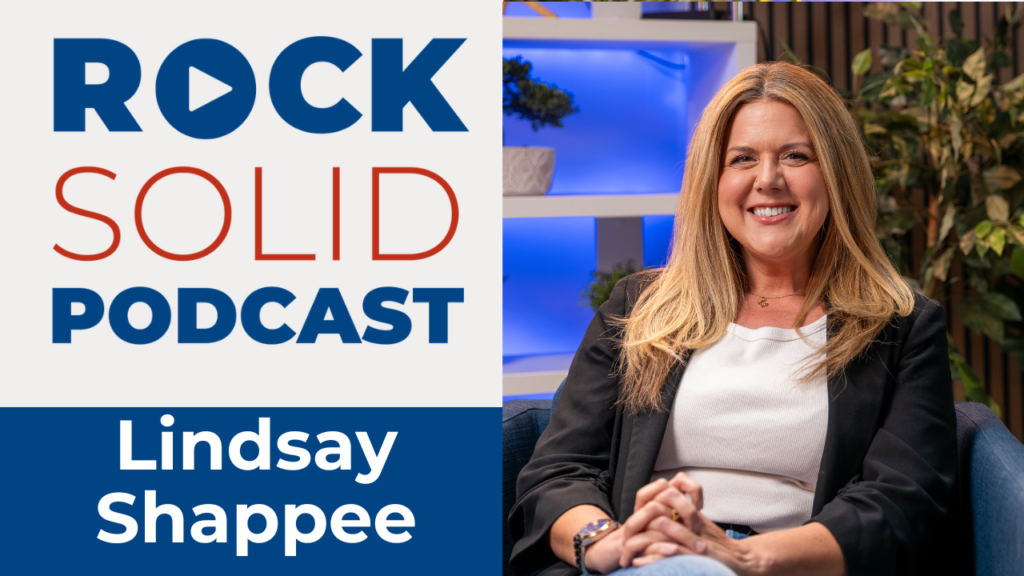
Lindsay Shappee grew up watching her biological father go from a butcher with a toolbox in the back of his truck to designing and building custom homes. Her first job was sanding and priming plantation shutters. She filed that away and spent the next twenty years at JP Morgan, eventually reaching VP in the private bank. When the moment came to leave all of that behind, she did not become a consultant or a coach. She became a roofer. Her company, Family Friend Roofing and Construction, is based in Round Rock, serves the entire Central Texas market, and has grown to cover all trades in less than two years.
What actually moved her to leave had nothing to do with the career opportunity. It was a moment in a sales meeting. The company’s leadership was delivering a message about “family first” culture. And the behind-the-scenes reality, what was being demanded of her during the hardest stretch of her personal life, while her aunt was dying — was so different from what was being said on stage that she felt the conflict physically: a flush in her chest, an overwhelming sense of being alone in a room full of people. That gap between stated culture and actual culture has a cost. Lindsay paid it long enough to know exactly what it is.
What she built afterward is almost the mirror image. Family Friend’s first investments as a company were in the Round Rock Chamber and the Five Point Board of Realtors — not because it was a smart marketing tactic, but because community is where the partners’ values actually live. That’s also why every project manager and every team member is required to be active in the community and give back. It’s not optional. It is the job.
Two years in, the company gave a veteran a roof for Christmas, partnered with USA Cares through Matt Maples, and worked alongside previous Rock Solid guest Will Williams to pair that roof donation with the power wheelchair that gave him his mobility back. None of this was planned as a PR campaign. It was the natural result of a group of partners who aligned on their values before they aligned on their pricing.
What values did you build your business around — and when was the last time you checked whether the business is actually living them?
Key Takeaways From This Episode
- Your real competition is not the company across the street: Lindsay does not see other reputable Round Rock roofing companies as competitors. Her competition is the storm chasers — the crews who appear after a hail event, do the work fast, and disappear before the first leak shows up. In almost any market, the real competition is the version of your industry that erodes trust rather than builds it. Know which one you’re fighting.
- Your first investments signal your actual values: Family Friend’s first two community investments were the Round Rock Chamber and the Five Point Board of Realtors — not lead generation platforms, not paid ads. That choice was not a marketing strategy. It was an expression of what the partners believed. Where a company puts its first dollars is almost always more honest than its mission statement.
- Culture is what happens after the meeting, not during it: Lindsay sat in a corporate meeting where the message was “family first.” Behind the scenes, the reality was something else entirely. That contradiction, felt physically, was the beginning of the end. A stated culture that doesn’t match the real one doesn’t just lose employees. It loses the best ones, the ones with enough self-awareness to feel the gap.
- Scale slow to protect what you built: Family Friend has turned down opportunities to grow faster than they could protect. Lindsay’s framing is direct: if you have a small fire and throw it into a forest, you need a lot of water to put it out. Scale that outpaces culture is just a faster path to a harder problem. Grow in ways that let you stay in front of every fire you light.
- Community involvement is not optional — it is the job description: Anyone who works with Family Friend is expected to be active in the community and to give back, not as a personal choice but as a professional expectation. Lindsay’s logic: a company that cares about the community it operates in is a company that will take care of the homes in it. The two are not separate.
Our competition is protecting the community and keeping those storm chasers away so that they know they can call any of us to help with their home.
Lindsay Shappee, Partner & CFO, Family Friend Roofing and Construction
I knew who I am as a person, and my partners, and what our core values are. I didn’t have a fear about the success of the company because I knew we would stick to those core values.
Lindsay Shappee, Partner & CFO, Family Friend Roofing and Construction
It’s not just a roof. It’s an asset class and part of your portfolio — and the biggest one for most people.
Lindsay Shappee, Partner & CFO, Family Friend Roofing and Construction
Episode Chapters
- [0:00] Welcome and What She Juggles — Lindsay is on multiple boards, owns a business with three partners, and has a son in baseball. Bryan opens on how she manages all of it.
- [0:29] The Support System Behind “How Do You Do It All?” — The real answer to the question everyone asks involves a co-parenting relationship, family, and a community that shows up. Lindsay breaks it down and names the organizations she serves.
- [1:51] From JP Morgan VP to Round Rock Entrepreneur — Two years ago, Lindsay retired from a banking career she’d built over two decades. This is where she was when the door opened.
- [3:29] Why Roofing? The Answer Starts With a Butcher and a Toolbox — Her biological father left a grocery store job with nothing but a toolbox in his truck and built a custom homebuilding business. Lindsay’s first job was sanding shutters. The answer to why she chose roofing has roots most people wouldn’t expect.
- [4:50] The Breakfast That Started Family Friend — She thought she was going to breakfast to discuss consulting on the financial side of a roofing startup. An hour and a half later, she was a founder. The story of how the conversation turned.
- [7:44] Competition Is Not Who You Think — Other reputable Round Rock roofing companies are not Lindsay’s competition. Storm chasers are. She explains why that distinction shapes everything about how they operate and how they position themselves in the market.
- [9:56] First Investments as a Company: The Chamber and Five Point Board of Realtors — Lindsay and her partners didn’t buy leads first. They invested in the community. That choice was not accidental, and it has compounded in ways a sponsored listing never would have.
- [10:22] A Veteran’s Roof for Christmas and the Will Williams Partnership — How a partnership with USA Cares and Matt Maples led to giving a veteran a roof for Christmas and how that connected to Will Williams, who received a power wheelchair alongside the roof. What happens when you build a company around its values and then actually act on them.
- [11:40] The Turning Point: Her Aunt, Terminal Illness, and a Forced Clarity — The biggest driver of Lindsay’s change wasn’t a bad quarter. It was watching her aunt, a lifelong nurse and entrepreneur, spend years telling her that she saw something more in her. That message landed differently at the end of her aunt’s life.
- [15:25] The “Family First” Meeting That Made Her Stomach Drop — In the middle of caring for her aunt and navigating serious family stress, her corporate employer gave a culture speech about “family first.” The backstage reality was something else. The gap was so visible, so physical, that it became impossible to ignore.
- [17:42] The Sunday She Couldn’t Get Up — After three community events in one weekend, Lindsay went home, went into isolation, and hit a wall. She describes a very dark stretch and the decision to go on leave, telling almost no one.
- [19:24] The Inner Voice That Said: This No Longer Serves You — Twelve weeks of recovery. The more she stripped away the exterior noise, the clearer the message became. The conversation about deciding to spread her wings rather than return to what was comfortable.
- [20:23] What Bootstrapped Means After You’ve Built Something — Family Friend has taken no outside financing. No investors. No debt financing to scale. Lindsay reflects on what it means to look back on that now.
- [22:57] Why Everyone on the Team Must Be in the Community — Community involvement is not optional at Family Friend Roofing. Every project manager, every team member is expected to be active and to give back. Lindsay explains why that requirement exists and how it connects to the quality of work they do on homes.
- [24:33] The Contained Fire: Scaling on Purpose, Not Just for Profit — Family Friend has had opportunities to grow faster than they chose to. Lindsay uses a fire metaphor to explain why: scale that outpaces your culture becomes harder to contain than it was to light. Growing intentionally is a strength, not a limitation.
- [26:26] Women of Wilco and Why That Room Can Change Your Path — The Round Rock Chamber’s Women of Wilco event. What Lindsay wants women in Williamson County — especially early entrepreneurs — to understand about showing up in that room and what a single conversation there can unlock.
Frequently Asked Questions
What does Family Friend Roofing and Construction do?
Family Friend Roofing and Construction is a Round Rock-based contractor serving Central Texas homeowners. The company handles all trades — not just roofing — including hail and storm damage repair, roof replacement, and construction work across the region. They partner with homeowners through the full process, from inspection through insurance documentation to final installation. Find them at familyfriendroof.com.
How do you know if a roofing company is trustworthy vs. a storm chaser?
According to Lindsay, the clearest signal is community investment: where did the company show up before the storm? Reputable roofing companies in the Round Rock area have established relationships with local realtors, insurance agents, and lenders, and are visible in the community year-round. Storm chasers appear after major weather events and often disappear before warranty issues surface. Lindsay’s approach: look at where a company’s founders spend their time when there’s no immediate transaction to close.
Is it a good idea to do business with friends and family?
Lindsay makes the case that if your quality of work is at a tier where you always do right by someone, there is no reason to give someone else the work you would want your own people to have. She runs it through the same logic she applied in banking: some financial advisers separate client relationships from personal ones as a precaution, but if the standard of care is consistent, the relationship is an asset. Family Friend Roofing has grown significantly through existing relationships, and Lindsay says they probably wouldn’t be in business without them.
When is the right time to scale a business?
Lindsay’s answer: not faster than your culture can keep up with. Family Friend has turned down opportunities to grow quickly and has been intentional about adding team members and expanding offerings at a pace where they can verify cultural fit and maintain quality. Her metaphor is direct: a small, contained fire is manageable. Throw it into a forest and you need enormous resources to put it out. The question is not how fast you can grow but how well you can hold together what you’ve already built while you do.
How can women entrepreneurs in Round Rock find community and support?
Lindsay points directly to the Round Rock Chamber’s Women of Wilco event as a starting point, but the broader answer is simpler: ask. She says the women in this community are accessible and generous with their time. If you don’t know who to call, find someone who might and ask them. They will either have an answer or know ten people who do. Lindsay says she gets regular calls from women wanting advice or simply wanting to be heard, and she takes them. That kind of network — people who give time before there’s a transaction — is what Round Rock has that most cities don’t.
About Lindsay Shappee
Lindsay Shappee is a Partner and CFO at Family Friend Roofing and Construction, the Round Rock-based roofing and construction company she co-founded about two years ago. She brings over two decades of experience in private banking and wealth management, most recently as a VP at JP Morgan’s private bank. She serves on the executive committee for the Ascension Seton Williamson Foundation, the advisory board of the Chapparel Women’s Club, and the governmental affairs board of the Five Point Board of Realtors. She is a participant in the Round Rock Chamber’s Leadership Round Rock Ascend Class of 2026 and lives in Round Rock with her son Aiden.
Connect: LinkedIn | familyfriendroof.com | Facebook
More From Rock Solid
Lindsay’s story connects directly to two earlier Rock Solid conversations: Shannon Black on how the companies that protect their culture don’t have to spend as much to keep it and Ennis Wright on why the companies that know their story are the ones TikTok rewards — both episodes circle the same question Lindsay raises: what do you actually stand for, and does your business prove it every day? Browse all Rock Solid episodes.
Watch or Listen
Prefer audio? Listen on your favorite podcast platform:
[PASTE PODCAST PLAYER EMBED CODE HERE]Full Episode Transcript
Click to read the full transcript
Bryan: Welcome to Rock Solid, the Round Rock Business Leaders podcast. Join your host, Bryan Eisenberg, as he explores the journeys of entrepreneurs and companies across Round Rock, Texas. From startups and nonprofits to large organizations, each guest shares their passion for doing business in this thriving community. Let’s dive in.
Bryan: Hi everybody, it’s Bryan Eisenberg and welcome to Rock Solid. But I’m joined today by my friend Lindsay Shappee from Family Friend Roofing and Construction. Welcome.
Lindsay: Thank you.
Bryan: Let’s start in a very fun place for you, I think, because you’re a relatively new entrepreneur after spending a career in banking. But you’re also involved in lots of different things. So the first question I want to go through is all those different things besides the chamber and all the different clubs, all those things you’re doing and how you find time to do it all. And your son’s in baseball — explain because I think that’s one of the biggest challenges that so many people struggle with today but you manage to always find time.
Lindsay: I do, and for myself which I think is important. There are a number of women in the community. I think that a question I get asked a lot — Dena does also, Dina Kavanagh — is how do you do it all and I always answer with you don’t see what I don’t do. Or the support system that I have. I’m incredibly fortunate to have a really solid co-parenting relationship with Aiden’s father and his family and my family. I get a ton of support from them. Couldn’t do it without them. So obviously I was lastly with JP Morgan. Retired as a banker almost two years ago, now an entrepreneur. I serve on the executive committee for Ascension Seton Williamson Foundation, where we obviously have a focus on health care but then a deeper focus on the vulnerable and poor to make sure that everyone has access to the care that they need. On the advisory board for Chapparel Women’s Club, which I’m sure if you’ve heard of — I know Dina spoke about it — but we focus on bringing women together to serve all of the nonprofits in Williamson County. Most recently I’m on the governmental affairs board for Five Point Board of Realtors, and I own a business with my three partners and I have a son. Baseball is all consuming, but he loves it and he’s passionate about it. And that’s some of my favorite time and memories is being at the field and watching him play.
Bryan: Yeah, I’m getting the opportunity besides, you know, my son went all the way from being this big and pointing at a minor league stadium at the field and that’s the only place he ever wanted to be. Watching him go through high school, playing college, and now he’s volunteer coaching at the Round Rock Baseball League at 12U team. And I’ll tell you, it’s almost equally as fun watching him engage with those kids and knowing that you’ve poured into him so much that he’s pouring back out to others.
Lindsay: Yes. Aiden does that naturally. He’s just a great kid. He got to do Dragon Camp a few weekends ago and it’s just so cute to watch him do that. I drag him along to stuff sometimes that maybe he doesn’t want to go to, but he’s also recently getting his hands dirty as an entrepreneur and doing some things for the business. So come summer, there will be baseball and work, and I’m excited for that.
Bryan: So let’s talk about the work because I do want to go into your past career and how you kind of got here as an entrepreneur, but out of all the businesses — you’ve been a banker — why did you choose to open up a roofing company here in Round Rock?
Lindsay: It’s a great question when there are so many companies and there are so many different directions you could have gone. I think a natural one I hear people always doing is consulting and things like that. A lot of people don’t know — I grew up around construction. My biological father started — left being a butcher at a grocery store — and had a toolbox in the back of his truck and I watched him go from that to designing and building custom homes. So my first job other than watching my sisters was sanding and priming plantation shutters. I learned a very hard lesson about what types of paint you can put in sinks and watched him swing a hammer. And when I came into home ownership, I naturally did a lot of things on my own home. I’ve always had a fascination for it. It was not the route that I thought I was going to go. I found myself at a crossroad and had a choice. And I have always leaned into this community and my family and my friends. And there were a select number of people that I was speaking to and I mean I was really heartbroken. This was not the route I thought that I would retire in the role that I had last. I made a phone call to a friend and was invited to breakfast and I was under the impression I was going to have a conversation with him about launching a roofing company and more on the consulting side of what does that look like from a financial standpoint. And I met my now partner Aaron Bernard. About an hour and a half later, after the meeting, the conversation turned to — well we actually don’t know how to do all of these pieces and we need somebody to run it, run this component of it — and it was really a multifaceted role which fascinated me because my brain runs in five directions at all times. People can argue that that’s inefficient. I am very neurodivergent. It works for me. And we — it made sense.
Bryan: There aren’t many people who do both finance and marketing but keep going.
Lindsay: I was looking at the industry that I was coming from and we are really fortunate especially here in Round Rock. There are a number of bankers that stand out and do an exceptional job and there are people that believe that banking should still be a personal relationship. But the reality is with how exponentially over the last 10 years alone AI and technology has advanced, there are a number of factors of that job that are taken over by technology. We’re facing a time where in five to ten years there may not be as many bankers in person. And my values are — I live here, I give here, this is where my son is being raised. I love interpersonal relationships. I believe the face to face should never go away. And so exploring opportunities that would help grow the community, give an honest company that could do great work and more than just roofing — it made sense to me to use the skills that I already had to bring a business here in surrounding areas that would help homeowners protect their asset. And it just clicked and it was an amazing opportunity that I’m incredibly thankful for. Obviously I did not come up with this idea, but I know that I deserve to sit in this seat and I love it. And I don’t think I could have ever made this jump if I was not in the place that I am with all the relationships I have in the community. I never take that for granted. I can honestly say I’m happier than I’ve been in a very long time.
Bryan: Did you have any reservations about what it would take to market a roofing company in this competitive market? Because there are some very well-known roofing companies in the area and others who pop up every storm.
Lindsay: I think fear could be a more accurate word when you talk about the emotion behind it. In any industry you have competition. I personally don’t look at — there are some very reputable, amazing companies here. I don’t necessarily see them as my competition. We all have conversations. We’re friendly. Our competition is protecting the community and keeping those storm chasers away so that they know that they can call any of us to help with their home versus someone who comes through just when a storm comes in. In the industry that I came from — how many banks do we have? How many wealth advisers? It seems every new building going up is another bank. In any industry, you have the best, you have great, you have really invested people that care about people. And then you have people that are just there to profit and they’re going to take care of your immediate need and then you’re never going to hear from them again. I know who I am as a person, and my partners, and what our core values are. And so I didn’t have a fear or reservation about the success of the company because I knew we would stick to those core values. We’ve seen a lot of success in less than two years. And I knew that with the backing of the community and the relationships that I had and what our core values were that we would be just fine.
Bryan: Yeah. I always like to say, success leaves clues. It leaves evidence in places. And even in our industry in the home care industry with my wife — when we first started two years ago there were 70 home care agencies in Austin and north Austin surrounding areas, right? Now we’re over 150. Every other day there’s somebody else opening up a business. And I’m like, all you need to do is find who’s invested in the community and those are the ones — if they care so much about the community they’re probably going to take really good care of you.
Lindsay: Yeah. And that shines in our structure and the way we came out of the gate. We stand behind that. Our first initial investment was in the chamber. Our second investment was with Five Point Board of Realtors. We’ve very quickly found a core conversation. I come in and I have ties in the community, I have things that I’m passionate about. But it was digging with the guys and talking about what’s important to you. And a unified thing is we all very much care about our veterans and we very quickly partnered with Matt Maples with USA Cares. You’ve seen — we gave a veteran a roof for Christmas.
Bryan: I was just going to go into that. The same veteran that we were able to work with Will Williams, who’s been a previous guest, to donate a power wheelchair who desperately needed to be able to get his mobility back in his life. And then the next thing I hear is that you’re working with Will and Matt Maples. You’re giving them a roof over their head — literally fixing the roof over their head.
Lindsay: Yeah. So when you focus on the core of the values of your company, the proof is in the pudding. That was really important to me. That was honestly for the longest time the biggest struggle I had working with a larger corporation — because you want to be met there. I care about where my son grows up. I care about my friends in the community, education, healthcare, all of these things. And I think that also gives a lot more confidence and power to keep going and keep building and telling our story because we know at the core who we are. Your head hits the pillow at night and you’re like, man, what a cool day. I mean there are lots of moments in my life I can’t forget, but one of the ones I will never forget is when Rico first got in his chair and started moving around and just how much that changed him. And then seeing the same thing with the roof.
Lindsay: One of the biggest proponents for this entire change was my aunt becoming terminally ill. I know I’ve shared with you — my aunt was a lifelong nurse. My grandmother was a nurse. And my aunt and her husband are lifelong entrepreneurs. She launched home healthcare in the Houston area. And forever growing up, what I perceived as criticism was — these corporations don’t care about you. There’s going to come a time when you’re going to see it. And now I can hear it: it’s not that I’m not proud of you, but I see so much more in you and I see your heart and who you are. And I wish it didn’t have to come to the circumstance of almost feeling like I had to choose — spending time with my family and this really multifaceted layered grief for an extended period of time — for me to get here. But the reality is the opportunity to take this massive promotion and some I’m sure would say it was a complete failure — you keep that. Because I would say you gave me the opportunity to reinforce my values and who I am and to honor her legacy, which is to care for people, to be involved in your community. And to do it — if you do it in a way where you put people first and honor them and where you live, you’ll never go without a day in your life. And it makes me so proud. She watched — unfortunately when she passed, we were just a year in and she saw me struggle and she still was encouraging and asked questions and never doubted me. I’m so grateful for her and I hope that I make her proud. And I did not want to cry on camera. But that’s humanity. And I’m proud and I’m honored to live and walk in her footsteps and live the life of an entrepreneur because I wish I would have done it years ago, but sometimes you have to walk through life lessons in order to get here.
Bryan: The same thing happened to you in corporate life, right? You started as a teller and you quickly escalated through the success there. And I imagine there are a lot of people who are trying to climb that corporate ladder. You started getting the success and you started getting the roles and you found yourself in a role that didn’t align. What was that trigger? What was that moment that you knew this is no longer me?
Lindsay: There were two. The one — we were in a sales meeting and the tagline was getting on to some of the people about taking more time for yourself. You know, be with your family. Our culture is family first and we are a family. And the behind-the-scenes conversations and things that were happening were so conflicting for me personally — at that state, at that moment, when that statement was made — that I could feel the flush in my chest. And I felt really alone. And the reality is I took a really big risk. I was with some people that knew me better than others. But I think the word culture gets tossed around really, really easily. To say and preach that that is the culture — I’m not insane. I am very aware of my feelings and validating them and watching things that happen. That is not the culture. Because in no other corporate culture within the same organization and other ones that I worked with had I ever experienced something that had to do with my family and a number of other things that were going on where that was the response. I felt like a failure even though there were still assets and things that were moving. The other biggest piece is there was a conversation that happened — I’ll keep it very brief — but my reputation came into question and I remember the end of multiple conversations that were unnecessary it being “well, the good news is luckily your reputation wasn’t harmed” — and again the visceral anger that it lit within me knowing how I conduct business.
Lindsay: I literally went home, still was running a number of events in the community, went through three in one weekend. And that Sunday I woke up and I couldn’t get up and I felt very desolate, very dark, very depressed, really misunderstood. And I remember thinking there wasn’t a way out because of all of the number of people that I would let down because of how this journey had unraveled. I spent time — I told no one. Not even my mom until 48 hours after it happened. And I told my best friend like the day after. But when I made the decision to go on leave, I told absolutely no one. And I remember staying alone in my room — I arranged obviously care for Aiden — and I thought I felt so alone and I thought I had hit rock bottom. There were some really unhealthy thoughts going in my head. What that did for me though is it shut out all of the exterior voices and everybody else’s opinion of who I should be and what I should do. And I thought that if I could recover myself from burnout in twelve weeks, probably not possible, that I could go back and I would hit it head on and everything would be great. And the more time I spent by myself in my own space, trusting the very inner voice, it just said, “This no longer serves you. You’re not meant to be here.”
Lindsay: I had at one point no idea what I was going to do. I knew I wasn’t going to go to another bank and start over. But I knew it was time to spread my wings. There was a point where I was like, I would go bartend and wait tables — anything to just not go back because I’m just so done and burnt out. But it was some burnout. At the same time, I think when you step away from something that is not feeding your soul and your passion that you’ve been in for years — we get really stuck in “you’re good at this and you’re successful at it.” And that is fine. That is for people that climb corporate ladders. There is nothing wrong with that. That is not me. I have a creative side. I have a business brain. I feel big. And I didn’t know what was going to happen. And then I shared the rest of it earlier. But it was — I look back on that time and the amount of humility that I found. We started a company bootstrapped, no financing. We’ve never taken on any financing. I didn’t know I was capable of it and I look back on it now and think of all of the scary times and I’m like I would do it again in a heartbeat.
Bryan: Let’s go back to that word you used earlier — reputation. When you’re walking around the community and you’re wearing your Family Friend Roofing and Construction hat, what’s the reputation you want everybody in the community to see in you?
Lindsay: For myself — I believe that it’s there, that I care about the community, that I show up, that I give back. That my family is incredibly important to me. That they can trust us — trust is very important. Someone recently said, you know, a lot of times people recommend you shouldn’t do business with your friends and family. Fair. And it can be, right. But if you go back to the core values and where we started — if you really live and breathe and die by the fact that your quality of work is a certain tier, that you’re always going to do right by someone, then why would you want anyone else to do it? And I feel so confidently in the practices that we have in place and the quality of work that I love doing business with friends and family. We probably wouldn’t be in business if we did not do business with friends and family.
Lindsay: Developing our youth is really important to me. All of our project managers, anyone that works with us has to be out in the community — whether that is networking with realtors, insurance agents, lenders. Giving back also is mandatory. So I think when you — that’s who I am and I believe that the core group of people and people that know me know that I am very passionate about our community. I care about people. I’m a very strong advocate. I’m not scared to use my voice. And I feel like I have a good hold on how I’m perceived and how I want to be perceived. And then the last but the most important piece is that I’m a mom. I brag — sorry, Aiden. But that child has given me a lot of skills and patience and happiness.
Bryan: I know without a doubt that Family Friend will continue to succeed in the next two and a half years. What’s your concern about keeping that culture and keeping those young people doing all of those things they’re doing currently?
Lindsay: I think we have a good hold on that too. There have been a number of different times where we’ve had the opportunity to scale very quickly and it’s very intentional that we have not. We’ve had people come join our team that were not a match for our culture and we’ve really honed in on who’s the right person. And some people would go — that’s so crazy, you’re just selling a roof. It’s not just a roof. It’s roofing and construction so we offer all trades. But I think this comes from being a fiduciary and having to care for people’s assets so much. And when I look at a home, not only is it the place where your head hits the pillow and it’s your safety harbor, but it’s an asset class and part of your portfolio — and the biggest one for most people. Some it’s all they have. And so you can interview and start training a project manager and you can figure out very quickly — it’s okay to be motivated monetarily, certainly, because we only need money — but you can quickly pick out who has the right intentions and we are perfectly fine growing at a slower pace. You do that by scaling appropriately, not just for profit but for the foundation and core of what your company is. It’s very easy to scale and make a whole ton of money and go — oh my gosh. But that’s also a recipe for crash and burn. If I have a little wave of fire and then I throw it into a forest and it explodes, well then I need — how much water does that take to put out? But if I keep that contained and go that’s not working, step on it and put it out, then I can move on. And very — I think identifying those things is a strength of ours.
Bryan: We have the Women of Wilco coming up with the Round Rock Chamber in a few weeks. If you had a chance to speak to the women in Wilco — whether they’re in their careers or thinking about being an entrepreneur or are currently an entrepreneur — why do you think it’s important for them to be in that room?
Lindsay: That’s a fantastic question. The finalists this year paint a beautiful picture of all of the different lanes you could potentially be in to be nominated in that room. Your wife is nominated. Stacy Johnson, my great friend from Central Texas Table of Grace, it’s an amazing nonprofit. And what I want women to understand, to know, to live and breathe is — there is a way. First of all, use your voice but you don’t have to stand at the top of a mountain and scream at the top of your lungs in order to be heard. I think leaning into your community especially in Williamson County and Round Rock — it is very intentional that our business was founded here. That room is important to be in. You could walk into that room and potentially change your life because individual conversations with some of these ladies — and they will give you the time. A lot of my time is occupied with people calling and wanting to have a coffee or a lunch or a Zoom call and they want advice or they just want to be heard. And I’m very intentional now — if I can’t do it, I know ten women that can. And that network and community and the opportunity to pick somebody else’s brain, but also to have someone pick yours and bring out things you may not see in yourself — or say “you know who you should meet, I have the perfect match for you” — that’s what makes Round Rock different. And I don’t want any woman in Williamson County, Round Rock, surrounding areas to sit and feel alone or unheard because they don’t know who to turn to. Ask someone, or ask three people, ask five, keep asking and someone will take the time to sit with you or put you in a room where you will be inspired. If you are early in an entrepreneurial space or in the fundraising nonprofit space, or you just want to be more involved and don’t know what that looks like, I would go to that luncheon and expect that you would make at least ten new connections that could put you on the path to where you want to be.
Bryan: If people want to connect with you and they want to have more questions, or maybe they need a new roof or roof repairs or some other construction, what’s the best way to get in touch with you?
Lindsay: For roofing or new construction, go to our website, call us. If you want to connect with me on a personal level and you’re interested in sitting down and having a conversation, you can find me on LinkedIn, Instagram, Facebook. I use all of them. I took a very long hiatus from LinkedIn because of the world that I came from — never having a free pen. I’m still working on that. But you can find me on any of those platforms, and there’s a chance right now as things continue to scale, if you call our office number I might answer.
Bryan: Awesome. Thank you so much for your time today.
Lindsay: Thank you.