
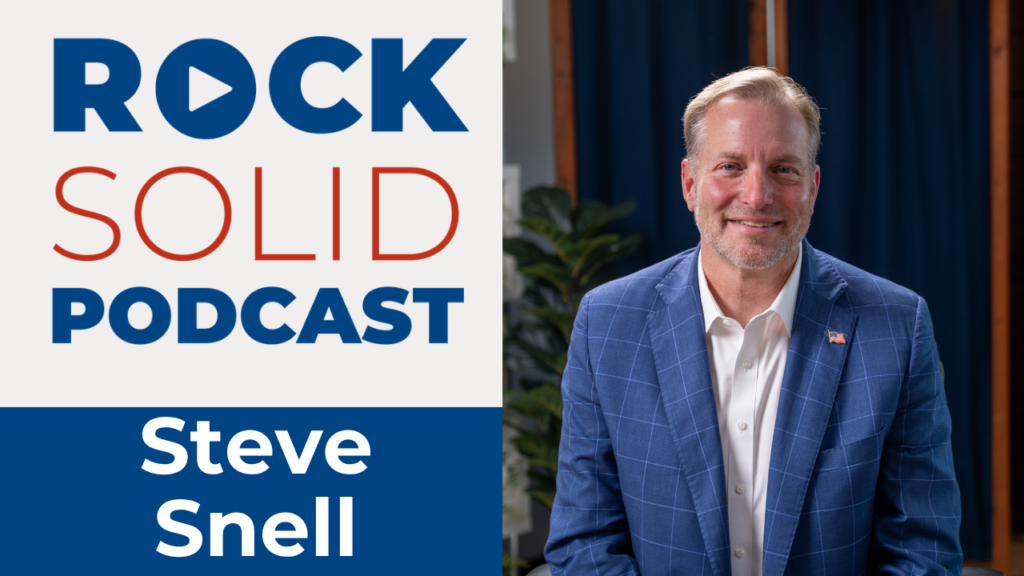
Steve Snell doesn’t have a law degree. When Williamson County named him county judge in 2025, well-meaning friends congratulated him on passing the bar. He hasn’t. In Texas, the county judge isn’t a judge in the courtroom sense: no gavel, no docket, no robe. It’s the closest thing county government has to a CEO, and Steve Snell, a 31-year public school educator, walked straight into running one of the fastest-growing counties in America.
He spent three decades as a Texas history teacher, then principal, then superintendent, most recently leading Liberty Hill ISD through growth that took it from roughly 4,000 students to nearly 11,000 in six years, building a new school almost every year to keep pace. That isn’t a resume line. That’s the exact muscle Williamson County needed when Bill Gravell stepped down and the commissioners came looking for someone who had already managed rapid growth up close.
Months into the job, the historic July floods hit Central Texas. Snell had no county government experience to lean on, but he’d run crisis after crisis as a school administrator: a death in the community, a tornado, an ice storm. What his team did in those first days, and what he saw when Williamson County’s emergency responders went to help in the hardest-hit counties, is worth hearing him describe directly. It isn’t the story you’d expect from someone six months into the job.
Williamson County has roughly 760,000 residents today. County planners expect that number to double by 2050 and triple by the end of the century. Every road, every water line, every acre of right-of-way the commissioners court buys this year is a bet on people who haven’t been born yet. Round Rock, Cedar Park, and Georgetown planned ahead for water. Not every city in the county did, and Snell has to help them catch up before the growth arrives anyway.
Snell showed up to his own job interview for county judge with a three-ring binder, tabbed and highlighted, because a Texas history teacher never stops believing in always being prepared. What are you doing today to prepare for the version of your business, or your city, that will exist in fifty years?
Key Takeaways From This Episode
- A Texas county judge isn’t a courtroom judge: it’s the CEO and emergency manager role, overseeing everything from the sheriff’s office and jail to economic development across 30-plus county departments.
- Growth math doesn’t wait for you to be ready: Williamson County is projected to double to 1.6 million people by mid-century and triple by 2100, which means the roads and water systems planned today have to serve people who haven’t been born yet.
- Preparation is a career-long habit, not a moment: Snell walked into his county judge job interview with a tabbed, highlighted three-ring binder, the same instinct that carried him from the classroom to the commissioners court.
- Water is the quiet variable behind every growth story: Round Rock, Cedar Park, and Georgetown planned ahead for water infrastructure. Smaller cities like Florence, Jarrell, and Liberty Hill are watching their growth wait on it.
- Access to local government is simpler than people think: Snell’s answer for how to actually be heard is to show up to community events, ask questions, and expect him to say hello back.
Think of it as the CEO of the county, or the superintendent of the county.
Steve Snell, Williamson County Judge
We’re a part of something bigger than yourself. We’re here to make decisions for the future which will help people we might never meet.
Steve Snell, Williamson County Judge
The best time to plant a tree was twenty years ago. The second best time is today.
Steve Snell, Williamson County Judge
Episode Chapters
- [00:00] The Fastest-Growing County in America: Bryan sets up why a Williamson County episode matters even to listeners who’ve never been here.
- [00:59] “I Don’t Have a Law Degree”: Snell explains why “county judge” is the most misunderstood job title in Texas.
- [03:16] The CEO Nobody Elected to Be a CEO: the real job includes emergency management, the sheriff’s office, economic development, and 30-plus departments.
- [03:48] Floods, Ice Storms, and a Team Built for the Worst Day: how his team responded to the historic July floods, months into his term.
- [09:08] The Three-Ring Binder: how a Texas history teacher out-prepared everyone else for the interview of his life.
- [15:52] 760,000 People Today. 3 Million by Century’s End.: the long-range planning problem nobody wants to think about.
- [18:39] The Water Problem Nobody Wants to Own: why some Williamson County cities are ready for the boom and others aren’t.
- [20:33] Spaceports, Sports Teams, and What’s Next: the diversification play behind Firefly, Kalahari, and the next Round Rock-style boom.
Frequently Asked Questions
What does a Texas county judge actually do?
A Texas county judge is not a courtroom judge in most counties. It’s a constitutional office that functions like a county CEO, overseeing emergency management, the sheriff’s office and jail, economic development, and dozens of county departments. Every one of Texas’s 254 counties has one county judge and four commissioners, regardless of population.
Who is Williamson County Judge Steve Snell?
Steve Snell was appointed Williamson County Judge in March 2025 after 31 years in Texas public education, most recently as superintendent of Liberty Hill ISD. He succeeded Bill Gravell, who left to become a U.S. Small Business Administration regional advocate.
How fast is Williamson County growing?
Williamson County has roughly 760,000 residents today. County planners expect that number to double to about 1.6 million by 2050-2055 and reach approximately 3 million by the end of the century.
How do I contact Williamson County Judge Steve Snell?
Judge Snell can be reached at SteveSnell@wilcotx.gov or through the Williamson County website. He regularly attends community events across the county and welcomes residents to introduce themselves in person.
What is Williamson County doing about water and infrastructure for future growth?
Williamson County doesn’t provide water directly (that’s a city function), but the county is working to bring cities together on regional water solutions, acquiring road right-of-way decades ahead of need, and executing a long-range transportation plan that includes toll roads, rail, and future right-of-way for technologies like air taxis.
About Steve Snell
Steve Snell is the Williamson County Judge at Williamson County. He spent 31 years in Texas public education, including six years as superintendent of Liberty Hill ISD, before being appointed county judge in March 2025. He holds a bachelor’s and a master’s degree from Texas Tech University and lives in Leander with his wife of 30 years.
Connect: LinkedIn | Williamson County website
More From Rock Solid
If this episode resonated, hear Bill Gravell on representing small businesses nationally, the man Snell succeeded as county judge, and Round Rock Mayor Craig Morgan on leadership, growth, and the future of Round Rock, both wrestling with the same question of how to lead a place that’s growing faster than anyone planned for. Browse more Round Rock civic and government leaders.
Watch or Listen
Full Episode Transcript
Click to read the full transcript
Bryan: Hi everybody, it’s Brian Eisenberg. Welcome to Rock Solid. This week I’m joined by County Judge Steve Snell. Now we have a lot of listeners obviously from the area, but people who are also not from the area, because one of the main missions of our podcast was to highlight what your predecessor, Bill Gravell, talked about. We are the fastest growing county in the country, and there’s a lot of special reasons why that happens. So we want to feature it on the podcast with such great people. And I know, from my understanding, you started off as a history teacher, right? So I’m going to ask you to put on your history teacher hat and explain to people that a county judge is not in a courtroom.
Steve: Right, right. So that’s one of the great misnomers. When I went from education, 31 years, to county judge, people say, “I didn’t know you had a law degree.” And it’s like, I don’t. So the county judge, it’s constitutional. There’s 254 counties in Texas, okay, and by our constitution they set it up so that every county, no matter what your population is, has one county judge and four commissioners. Harris County, five, six million people, one county judge, four commissioners. Loving County, which might have a hundred people on a good day, county judge and four commissioners.
Bryan: How did they find the four commissioners out of a hundred?
Steve: Yeah, good question. So I kind of picture the Wild West. When you have a small town, you needed that judge. And then as we grew, you needed someone to build roads. The commissioners were originally called road commissioners. So we worked together, and being the county judge of a county like Williamson County, there’s a lot of responsibility. There’s lots of services the county provides. But it’s very exciting because you’re part of something truly historic with the growth in the cities. Williamson County, forever suburban America. I live in Liberty Hill. Liberty Hill was a small town with one flashing light. At one point I lived in Hutto, 15 years ago, at one point it was a small town with a flashing light. At one point Taylor was the largest city in the county.
Bryan: Yep.
Steve: And then Dell Computers came along and the growth hasn’t stopped, and you just see all the exciting things coming, and the quality of life, and people want to move to Austin. The weather’s great, the vibe is great, the culture is great. But there’s so many great cities in Williamson County, and the cool thing is they’re all different. Like Round Rock has a feel to it, Cedar Park has a feel, Liberty Hill, Jarrell, Taylor, they all have a feel to them. And it’s good to be a part of it, and it’s an honor to serve the people of Williamson County.
Bryan: I appreciate it. Well, one of the things, my understanding of county judges, you’re more of a CEO and emergency manager than judge.
Steve: Sure. Right, right, right. So think of it as the CEO of the county, or the manager of a county, or like, I was superintendent of schools, kind of the superintendent of the county. So there’s things the county judge has responsibility over. One of the main ones is emergency response. And thankfully, for better or for worse, I had a lot of experience as a school superintendent, as a high school principal, managing various crises, whether it was a death in our community, a hurricane, a tornado, or an ice storm. Had a lot of those experiences. So when I took over as county judge, and a couple months later we had the historic floods in July, I had some experience to lean on, but even more important, the emergency team of Williamson County is phenomenal. They are qualified, they’re experienced, many of them used to work for FEMA or Texas Department of Emergency Management. So very capable, swift, decisive actions to save life, save property, and in Williamson County I thought the team did a great job with that. And then we had a chance to go down to Kerr County and learn from what the state was doing there, and the tragedy and all the things going on. Lots of moving parts, and lots of government agencies all working together. So it was remarkable to watch. I wish we didn’t have to do it, because it was a tragedy. But unfortunately tragedies will continue to happen. It’s just, I definitely learned a lot. And like I tell people, it doesn’t matter, because the next year was an ice storm. It doesn’t matter what the emergency is, Williamson County is going to be prepared, and we have experts in place to make sure we do it the right way. So I’m grateful to work for that.
In addition, I work closely with the sheriff and the jail staff, that’s part of my responsibilities. We also have a juvenile justice center, so I serve on that board in responsibility with the juvenile justice center. And then there’s about 30 to 35 departments, from fleet services to maintenance to transportation to animal shelters. The county judge has his hands in a lot of services. And then one thing I get to do, because if you’re a small county judge I guess you could at a large scale also, there’s some judicial duties you can take on, if you choose to, like non-contested probate. I have the authority to marry people, but other judges in small towns do a few more things, they actually sit on court and do some judicial things. I don’t. But the cool thing about Williamson County is you also play a large role in economic development. I’ve been able to sit in a lot of rooms I never dreamed I would be a part of, with CEOs of large companies that want to come to the county and bring hundreds, thousands of jobs. So that’s been a very exciting part of it as well, in addition to all the things we do to serve the people of Williamson County.
Bryan: Well, we thank you for all the service that you do. I’m really curious, because you started as an educator, a Texas history teacher, became a principal, assistant superintendent, superintendent, and then you walk into this role. How did working with the kids prepare you for day one as a judge?
Steve: Well, I don’t know about how working with the kids prepared me, the kids are fantastic, everywhere I’ve worked, Liberty Hill, Hutto, the kids have been the best part of the job, bar none, the teachers are a wonderful part of the job, bar none. What prepared me, through the role, whether I was principal or assistant superintendent, is being involved in the chambers. I was on the Hutto chamber board, and there were lots of great things going on in the city of Hutto. From there I moved to Longview, Texas, little different, slow growth, you got to work a little harder to even get the attention. But I served with the economic development and the chambers in Longview to get that going. And then when I got to Liberty Hill I was part of their economic development corporation. So watching the growth, managing the growth, really what prepared me for this job more than anything is the rapid growth in Liberty Hill. When I took over Liberty Hill we were right at 4,000 students, I think today they’re approaching 11,000. So we were growing a thousand a year. Part of that is building schools, so we were building a school a year, it seemed like we had construction going on all over the place, and cities and counties treat building schools like any other development.
So you learn that role, you learn how to work with utility providers in cities and city managers to work through all that logistics and roads. And I was able to build a really good relationship with the precinct 2 commissioner, Cynthia Long, and we worked very well together, very forward-thinking, we partnered together on a land purchase, mine was for a future school site, and then the county looked at possible future parkland in the Liberty Hill area. And through that work, when the time came and Bill Gravell stepped down to take another opportunity, that’s when I was approached and said, “Hey, we would really like you to apply for this job.” So in true educator fashion, I show up to my interview with a three-ring binder, I’ve got the budget tabbed and highlighted, I’ve got policies tabbed and highlighted, responsibilities, I’ve watched video, because you’re always prepared. I wasn’t a boy scout, but that motto, always be prepared. And I won the job interview process, and then hit the ground running. And it’s kind of similar to a superintendent, you still have 12-hour days, it’s still 24 hours.
Bryan: Surprised it’s only 12-hour days.
Steve: Yeah, every day I leave my house around 6:00, 6:30, and I get home around 6:00, 6:30 on a good day, but I have lots of evening things too. Hey, I enjoy meeting people, I enjoy visiting with the people of Williamson County. I want to be accessible, available, and I want people to approach me and be able to have a conversation on what they think Williamson County does good and where we can improve. If I don’t talk to the people, how am I going to know if we’re doing a good job or not?
Bryan: I’ve said it before on the podcast, this is not a show about politics, it’s about business and community leaders, and the only way I’ll sit across the table with someone is because I see them in the community, we’ve met in those evening events, and it’s like, yes, you’re a neighbor and I’m happy to have you here. I’m curious as well, because as a history teacher, when you start thinking your job now is about building for the future, actually even the future of those kids you were helping educate, how does that inspire you every day to do what you do?
Steve: It does, and it’s very cool, and I think I bring a unique perspective to the job because I love public education. Williamson County has incredible public schools. Round Rock has been a state leader for decades, Leander ISD, all of them are great, and I’ve been a part of two of those school districts, they do an incredible job. Now that I’m in this role, we worked toward higher education, the skilled labor, connecting with workforce solutions to give our children a competitive advantage, and teach them how to be young adults and continue the cycle of the American dream. So now that I’m in this role, I talk a lot more with workforce development, with higher ed folks, and instead of telling public schools what they need to do, let’s show them what we’re doing in Williamson County and inspire them, because whether it’s Cedar Park’s plug-and-play, whether it’s the small business startups in Round Rock, there are incredible opportunities no matter what an 18-year-old would want to do with their life. Whatever dream they have, there are people and mentors they can plug into and really fulfill that dream. If it’s higher ed, great, if it’s trade school, great, but we need to educate them on what’s out there and inspire them. Because as a superintendent, some of the things I’ve learned in the last year, I would have taken that passionately and run back to the school and said, let’s shift, let’s pivot, because there’s something for everybody, and a four-year college isn’t for everybody. But we need to know what the options are, and there’s a lot of options right here in Williamson County to not only get that education but to plug into a viable job that you can support your family with, and that’s exciting. And it’s not just for public education, because we’re close to Fort Hood, so as people retire or opt out of the military, we have great jobs to plug them into as well. We’re very blessed in Williamson County, we’re kind of at a crossroads of everything, and anybody can do anything they want to do if they apply themselves and work hard.
Bryan: We were fortunate this week, Bill and I sat with a group of Round Rock ISD educators in the business school, and we were talking about a couple students who’ve started their own businesses. It’s like they want to encourage the entrepreneurship, they want to plug into people like us who’ve started businesses and consulted to businesses. So how do we inspire them for something greater?
Steve: And Liberty Hill started, like a lot of the schools in the area, an entrepreneur class, and we were blessed the gentleman who teaches it now is the president of the chamber in Liberty Hill, a small business owner, and he’s giving back to those students. That’s the great thing. The bad news is we have 600 seniors in Liberty Hill across two high schools now, and there’s only a handful of kids, a few dozen, in those classes. I wish everybody could be exposed to, hey, if you were a business owner, and I know you’ve had several business owners on the show, what would you want to ask, what would you want to do, is it viable, how do you get customers, what’s your business plan, what’s your finance plan, just so many things I think we can do in high school that can prepare them for life after high school.
Bryan: I mean, you could think back to career days, or the college exposure days, but how cool would it be to have a day where you actually get exposed to business owners in the community, to ask them the questions like, I wanted to start a business, what would that look like? I think that would be kind of fun to do.
Steve: Yeah, because students know what they know, and they’re in their world, that’s comfortable to them. But let me show you the world, because when I see young entrepreneurs who come to Texas from other parts of the country, or even other countries, they’re coming with a worldwide view. They want to start a business right here, like in Round Rock, Texas, but they want to sell and provide services to the world. And that’s not a mentality I had growing up, my world was Texas. So to show them that there’s a big world out there, but you can do it all from Williamson County, Round Rock, Texas, it’s amazing.
Bryan: It’s interesting you say that, because being born and raised in Brooklyn, I remember a study they did on campus when I was in college, they asked the languages you spoke and the countries you came from, there’s over 200 languages spoken on campus. So I’ve always had that global view, I grew up with it. But I guess if you’re in the middle here, it’s not something most people would have, even if you’re in Houston or Dallas or any of the big cities, you didn’t necessarily have that same diversity of thought, culture, and businesses that we have now.
Steve: Yeah, that we do now, it’s a completely different thing. The world has evolved in incredible ways.
Bryan: I’m curious now that you’ve been in the role a while, and hopefully you’ll continue for years, but I want to take us 50 years out.
Steve: Okay, right, because you’re a history teacher, so go back 50 years, but let’s go forward 50 years.
Bryan: The county, people thinking about being county commissioner there, what skills, what values do you hope they bring into that role, that you’ve already brought?
Steve: Well, I think the number one value is to understand you’re a part of something bigger than yourself. We’re here to serve the county and the people of the county, and we’re here to make decisions for the future which will help people we might never meet or be a part of. When you look at Williamson County today, there’s roughly 760,000 people. We’re expected to double by the year 2050, 2055, so think about that, 1.6 million. Think about traffic on 35, a state road by the way, TxDOT does a great job too, but by the end of the century we’re looking at 3 million people. So what decisions does the commissioners court need to make today? We need a long-range transportation plan. And luckily, before I got here, the work of Judge Gravell and the prior commissioners, we have an excellent long-range transportation plan, it’s great, but it’s on paper. So now let’s execute on it. Acquiring right-of-way today for 50 years from now is very important, because land’s not getting any cheaper and we’re not getting any more of it. Trying to have that crystal ball, to have bonds in place to build roads as we need them, and to partner with entities like TxDOT or cities in the county to build a good transportation plan, because mobility and safety of our citizens is critical. You don’t want to be stuck in traffic, I grew up in Houston, I know what living on the freeway is like, we don’t want people to do that. So now we have toll road authorities who are part of the transportation solution as well, and then we talk about rail, there’s different aspects of rail in the greater Austin area, and then the latest thing is air taxis, I don’t know if you’ve seen those.
Bryan: Hey, I’m all for it.
Steve: Yeah, instead of calling an Uber car, you can call an Uber air taxi and it can get you where you want to go. So working with all those technologies, and business obviously works at a much faster speed than government does, but we’re Texans, we like to drive, we need roads and we need crucial infrastructure. The other thing, it’s kind of like planting a tree, the best time to plant a tree was 20 years ago, the second best time is today. We need water, right, our cities and the county isn’t in the water business, but we can definitely provide leadership to bring people together, because cities take care of cities and provide water to their citizens. But there’s been some cities who’ve planned better for that, and others who have struggled.
Bryan: Well, you look at Round Rock, they’ve been through their growing pains, they’re a very high-functioning city with great leadership, and there’s some other cities that are planning and growing as well, Cedar Park and Georgetown are great cities that are planning for the future of water.
Steve: But there’s some small cities, Florence, Jarrell, Liberty Hill, put in that group, the growth is just waiting to explode the day they get water. So how do we help them, how do we come together with a regional solution that will save everybody money, because ultimately it’s all paid for by the taxpayer. So how can we save the taxpayer money in the process? Everybody’s water bill is probably going to go up, but regional solutions, regional grants, working with the state, and then those complications of growth, whether it’s water, wastewater, energy in any capacity, there’s a government role in that and a business innovation role in that. And it’s exciting, what I see on the innovation side of energy is pretty phenomenal, the stuff you used to dream about, we have people making it a reality right here in Williamson County.
Bryan: There’s been cornerstone businesses that have shown up in the area, like Tesla, or you think about the Dell Diamond, Kalahari in Round Rock, without revealing anything you might know. But what kind of business, we have a Shields opening up right in Cedar Park, that’s going to be a big business, employee-owned, and they’re going to contribute a lot to the community. What do you think is on the horizon, or a category on the horizon here for Williamson County, that’s going to blow everybody’s mind?
Steve: Yeah, and it’s very important, you hear, hey, we need to diversify our economy, it kind of becomes cliche, but it’s very important, because you want a wide variety of jobs and skills to meet your job labor force. Historically we’ve had the tech industry with Dell and Apple, and on into Austin with Intel and Oracle. We’ve got advanced manufacturing in Williamson County with Samsung and Compal and all this advanced manufacturing coming. But a couple things you mentioned, Williamson County is now working toward becoming a destination location. So you look at recreation, you look at tourism, Kalahari, incredible, 7 million people or something like that, and the economy that it brings with it to the county and the city of Round Rock. Dell Diamond, with Reed Ryan Sanders, that is incredible, great family, and just great for the quality of life in Williamson County. And because we’re suburban America, we have youth sports, but you look at Cedar Park, they have minor league basketball and minor league hockey, pretty close, we have Major League Soccer, I heard we might even get indoor football coming soon, they delayed their grand announcement a little bit to make it even bigger. But when you look at Austin, the greater Austin region is the 12th largest metroplex in America right now, we’re starting to hear the greater Austin area being mentioned for NHL hockey, for possible NFL expansion, Austin, San Antonio, possible Major League Baseball, and as a baseball fan that’s very exciting.
But we need to continue to do good things as a county and show good governance, great cities and the county working together, we need great schools to make that happen, to make it attractive to those big markets. You mentioned Tesla, SpaceX, Elon Musk and all the great things he’s doing, and other companies continue to come. So tourism and retail is really going to take off with Nebraska Furniture Mart and Shields, that is an incredible economic driver, similar 25, 30 years ago to what IKEA was to Round Rock, and you think of all the economic activity that spurred, and the outlet malls, which is, I don’t know if you know this, the second most rated place in all of Round Rock, other than Round Rock Donuts, which is number one. But the outlet malls are number two. And look, we’ve already been designated a spaceport, we partnered with the city of Cedar Park, but we’re a designated spaceport, we’re perfectly positioned geographically between Fort Hood and the joint commands in downtown Austin, and the space industry will boom in Williamson County, anchored right now by Firefly, but there’s going to be a lot of announcements in the next year, and it’s going to be both consumer and military, because we love the military, we love space, I grew up in Houston so NASA is very important to me, but I mean, think about a company that landed a lunar lander on the moon from a room that looked like an old high school computer lab. It’s just incredible, and those types of jobs in the STEM industry are going to drive higher-level classes in public schools, private schools, and it’s going to bleed into more and more science-driven work. Cedar Park is focused, and Round Rock too, on the biosciences and healthcare industry, we’re going to see that expand as our population expands. So it’s so exciting to be a part of this, and help support our cities, support our citizens, and at the end of the day we want to build roads so they can, mobility and safety, we want to keep it safe with the sheriff’s office too, so great law enforcement, safe place to live, obviously great parks, great weather, which makes you want to be outside in those parks. I don’t know if you know this, but the county has five parks and over 3,000 acres of parkland and trails, because it’s quality of life, it comes down to quality of life. Why do you live in Williamson County, why do you live in Round Rock? It’s safe, there’s lots of great things to do with my family, it’s also good schools, good stores. You mentioned Round Rock Donuts, to me I’m just as passionate about the small businesses as I am about the large corporations, because the people who come and work for those corporations need great restaurants and stores to go to.
Bryan: Now, I know you’re a very big family man, and your wife’s also an educator, and you’ve got your two children, both college age now. I’m curious what that conversation was with them when you said, “Okay, I’m leaving education.”
Steve: Yeah, no, they thought it was cool, but cool for the wrong reasons. I’ve been married 30 years, very blessed. My daughter is 26 now, she went through school, she’s now in medical school. My son just graduated from LSU and he’s working construction in the Austin area. But when I told him, hey, I’m going to leave education, I have an opportunity to be the county judge, my son was like, “Cool, can you get me out of tickets?” And I’m like, “No, it’s not that kind of judge.” And he’s like, “Well, if my friends get in trouble, can you help them get out of trouble?” I was like, “No, I can go sit with them in the courtroom, but I can’t get them out of trouble.” And they’re like, “Man, why be judge?” But no, they’re very supportive, great support group with that, and they’re very excited. As a Texas history teacher it’s very exciting for me, but at the end of the day it’s not about me, it’s about service, and it’s about Williamson County.
Bryan: For the constituents out there who don’t know why they should meet with you, what would you tell them, again as a history teacher, the purpose of them meeting their county judge and getting to know who they really are, because you see it on the ballot, you look at the name, you may have heard a little buzz, but why does that person really matter to them?
Steve: Well, I think when we look at government and politics, all of our attention is on the national level, and it really doesn’t have any impact on our daily lives, correct? So you look at the government that’s closest to you, that’s really going to have an impact on your life, it’s your city government and it’s your school board, those roles are critical. And it’s as simple as, I don’t think people connect it, when you’re driving to work in the morning and there’s that construction going on, that’s the city, that impacts you every day on the way to work. And so from the county level, if they have concerns about roads, concerns about bridges, roads and bridges is a huge part of our budget, if they have a concern about safety, especially if they live in an unincorporated area, let me give you some population facts, the largest city in the county is Round Rock, with roughly 130, 135,000 people. There’s 155,000 people who currently live outside of any city, I’m in Brushy Creek, so in MUDs, I think there’s another 185,000 planned population in the near future. So anytime there’s a neighborhood built, especially if you live in a MUD and unincorporated area, it’s the sheriff’s office that’s going to provide safety, and it’s the county that’s going to build those roads, and we can’t always keep up. When you build a thousand homes next to an old two-lane road, and all the construction trucks tear it up, we need to come and fix that for mobility and safety, or we need to expand it, that takes a little time.
And so those two issues are critical, talking with your commissioner, understanding what’s going on, and just being informed. A lot of people aren’t engaged, but just going to the website and answering questions on what future roads are planned, because for example, 2243 used to be a nice little country road drive, now it’s extremely crowded. What are the plans, when are we going to expand it, how long is that construction going to take, all that information is available online, and it just helps with traffic. And then what’s even more important, when we go through those cycles to build new roads, get involved, tell us what you need, tell us what you see, because you drive roads every day that we might not drive, or your commissioner might not drive, so we need input, we need to hear where that’s going. And then it’s critical that we’re in tune with developers, so we know not only where but the timeline, and it shifts depending on market and water.
Bryan: If people want to either meet you in person, because I know you’re at a lot of events, or if they want to email you, get in touch with you or your office, what’s the best way for them to do that?
Steve: Yeah, sure, they can email me, they can look it up online, it’s pretty easy, SteveSnell@wilcotx.gov. I’m at a lot of places, I love visiting with people, I love meeting people.
Bryan: And you don’t bite if someone comes over to say hello?
Steve: Not at all. Friday nights you’re probably going to find me at a football game somewhere, at one of our local stadiums, but we try to be everywhere. My wife’s with me, everybody likes her better than me anyway. But yeah, if you see me out anywhere, just come say hello and introduce yourself, I’d love to meet you.
Bryan: Awesome. Thank you for your time today.
Steve: Yeah, it was great.