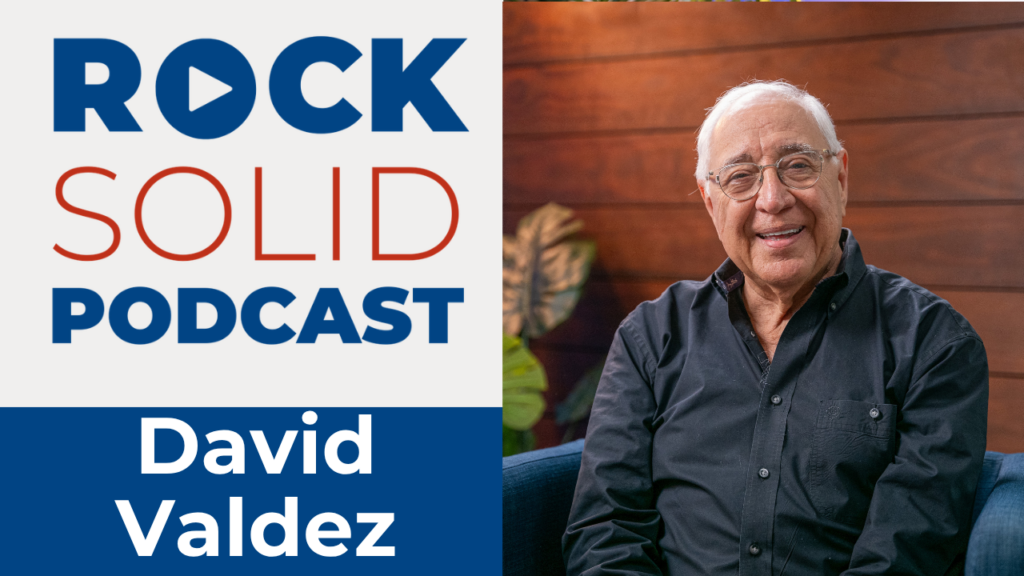
David Valdez has photographed three U.S. presidents, sixty-five thousand rolls of film, and a Soviet funeral where a dictator’s widow crossed herself in front of Margaret Thatcher and Fidel Castro. Ask him for his best story, and he tells you about a photo he chose not to take.
Valdez grew up in Alice, Texas, and learned photography the way a lot of people his generation did: the Air Force handed it to him. Four years photographing generals during Vietnam turned into a journalism degree at night school, a job at HUD, and eventually chief photographer for the U.S. Chamber of Commerce, a few blocks from the White House. A tip from an Associated Press photographer that Vice President Bush needed a new photographer turned into a cold letter, a bruising interview with the chief of staff, and a job that would put him behind the lens for a president through the fall of the Berlin Wall, the end of the Cold War, and the Gulf War. He is one of only thirteen people in American history to hold that title.
The moment that sticks with him isn’t in the archive. In 1986, the day the Challenger exploded, Vice President Bush flew to Florida to meet the astronauts’ families. Walking down the hallway, Valdez asked him directly: did he want the room photographed. Bush didn’t say yes. He didn’t say no. He left it to Valdez. Valdez put the camera down and walked into that room with nothing but respect for people who had nothing to do with the tragedy playing out on every television in the country. He still isn’t sure it was the right call. He’s certain it was the right one.
That instinct is the throughline of a career that could easily have been about proximity to power. Valdez talks less about the presidents he’s photographed than the people he’s mentored, the dishes he washes every Monday at his church, and the photography festival he built from four hundred people in a small-town museum into 1,400 photographers a year, on purpose, without putting his own name on the marquee.
Round Rock and Georgetown are close enough that this isn’t an abstraction. Valdez’s festival already has a Round Rock connection through Round Rock Studio, and he’s talking about expanding that partnership. What would it mean for your business if the thing people remembered about you wasn’t the win, but who you brought up with you?
Key Takeaways From This Episode
- Hire people better than you, on purpose: Valdez says he made it a rule to hire photographers who could outshoot him, specifically so he’d keep learning. Several of his former staff and interns now shoot for the White House, Mercedes-Benz, and World Press Photo.
- The best leaders let someone else take the bow: Valdez calls himself “the dancing chicken” for the Texas Photography Festival, the guy who draws the crowd so his team, led by CEO Julie Copenhaver, can run the show and get the credit.
- Not every moment is yours to capture: The discipline to put the camera down, out of respect for the people in front of you, is a leadership lesson that has nothing to do with photography.
- Round Rock’s business community keeps showing up in unexpected places: Valdez met Round Rock Studio’s Brent at this year’s festival, and the two are already talking about future events together.
- Service outlasts the resume: A former White House photographer who now washes dishes every Monday for 600 college students isn’t a contradiction. It’s the same instinct that got him the White House job in the first place.
I always made a rule when I was in positions to hire photographers: always hire photographers who are better than me, so I could learn from them.
David Valdez, Founder, Texas Photography Festival
That baby photo, that baby may grow up to be the president of the United States. You never know, but you’ve taken that photo.
David Valdez, Founder, Texas Photography Festival
I don’t go around saying, look at me. I see it as service to the community, providing photography.
David Valdez, Founder, Texas Photography Festival
Episode Chapters
- [00:00] Meet David Valdez: From Georgetown Photography Festival founder to former White House photographer, Bryan sets up a career with more turns than expected.
- [00:32] From Air Force photographer to the vice president’s lens: A cold letter and a shared Texas background turned a Chamber of Commerce photographer into George Bush’s personal photographer.
- [04:30] Alone in the Oval Office, praying for a president: The moment Valdez and two other staffers realized they were standing on the presidential seal, and what they did next.
- [05:14] Why he started the Texas Photography Festival: A lunch conversation with the mayor of Georgetown’s wife turned into an event that now draws 1,400 photographers a year.
- [07:04] One of only thirteen people who’ve ever held this job: What it means to be the fifth official presidential photographer in U.S. history, and the staff Valdez hired along the way.
- [12:18] The real throughline: being of service: Habitat for Humanity builds, USO portraits, therapeutic riding for veterans, and washing dishes every Monday for 600 college students.
- [16:36] “It’s not our victory. It’s their victory.”: The Berlin Wall decision that came back to Valdez thirty years later, in a church in Georgetown, Texas.
- [25:21] Embracing AI after living through the film-to-digital fight: What it was like the day two staff members quit rather than shoot digital, and why Valdez isn’t afraid of what’s next.
- [29:10] The photo he chose not to take: Standing outside a room full of Challenger families, Valdez made a call that still sits with him.
- [33:44] Who belongs at the Texas Photography Festival: From iPhone shooters to Michael Jackson’s personal photographer, why Valdez says anyone can walk in the door.
Frequently Asked Questions
Who was David Valdez’s photographer for?
David Valdez served as the Chief Official White House Photographer for President George H.W. Bush from 1989 to 1993, after four years as Bush’s personal photographer during his vice presidency. He traveled to 75 countries and all 50 states in that role.
How many presidential photographers has the United States had?
Only thirteen people in American history have held the role of official presidential photographer. Valdez was the fifth.
What is the Texas Photography Festival?
The Texas Photography Festival is an annual event founded by David Valdez and hosted at the Williamson Museum in Georgetown, Texas. It started with 300 to 400 attendees and drew 1,400 photographers this past year, including featured speakers, photo walks, and workshops.
Where can I learn more about the Texas Photography Festival?
Details are available at thetexasphotographyfestival.com, hosted annually at the Williamson Museum in Georgetown, Texas.
How much film did David Valdez shoot of President Bush?
Valdez shot roughly 65,000 rolls of film during his White House years. The full archive is housed at the George Bush Presidential Library on the campus of Texas A&M University.
About David Valdez
David Valdez is founder of The Texas Photography Festival and a former Chief Official White House Photographer for President George H.W. Bush. After four years as a U.S. Air Force photographer, he built a career photographing U.S. Chamber of Commerce leaders, then Vice President and later President Bush across 75 countries. He went on to head photography for Walt Disney Attractions, help write the original Nikon Digital School of Photography curriculum at Blue Pixel, and now serves on the Williamson Museum board in Georgetown, Texas.
Connect: David Valdez Photography | Instagram @davidvaldezusa
More From Rock Solid
Every guest on Rock Solid shows up because they built something that outlasts their own spotlight. Hear how Cam Houser built Action Works around service to others, how Deana Cavanaugh leads the Ascension Seton Foundation, and how Monica Ballard thinks about story and brand at Wizard of Ads. You can also meet every guest at the Rock Solid Leaders directory.
Watch or Listen
Full Episode Transcript
Click to read the full transcript
Bryan: Welcome to Rock Solid, the Round Rock Business Leaders podcast. Join your host, Bryan Eisenberg, as he explores the journeys of entrepreneurs and companies across Round Rock, Texas. From startups and nonprofits to large organizations, each guest shares their passion for doing business in this thriving community. Let’s dive in. Hi everybody, it’s Bryan Eisenberg. Welcome to Rock Solid. I am honored today to be sitting here with David Valdez from the Georgetown Photography Festival and the Texas Photography Festival. You have such an amazing career. One of the things you’re most famous for is being George Bush’s presidential photographer, but I want to look back at your full career, because you started learning photography in the military. First, thank you for your service. Then you became a vice presidential photographer. Then you went to Walt Disney World and were in charge of photography there. And now you’re doing the festival and working with the arts here. What’s the through line through all of those things in your career?
David: You know, looking back, it didn’t occur to me when I was eighteen years old and President Nixon wrote me a letter inviting me to join the military. I was trained as a photographer in the military, and after four years I wound up in Washington, D.C., working for the federal government and going to night school at the University of Maryland. I finally got a degree in journalism, but I never really thought about being a photographer as a career. It was because I learned it in the military. It was the only thing I knew how to do.
I wound up working in the federal government at Housing and Urban Development as a photographer. It was the early ’70s, and I was traveling all over the country documenting the urban rebuilding after the race riots of the ’60s, still going to night school. When I graduated, I thought, well, now I want to work for the Washington Post or Time magazine. They weren’t interested, because I didn’t have the journalism experience. But I wound up getting hired by the United States Chamber of Commerce as the chief photographer.
Now I’m photographing the presidents of national companies, or a small businessman out in Fresno, California. I was traveling a lot and meeting a lot of interesting people. One of my assignments was to photograph Barbara Bush, who was the wife of the vice president of the United States. One of the press photographers, Jay Scott Applewhite from the Associated Press, told me that Vice President Bush’s photographer had left and gone to Time magazine, and I thought, that’s where I want to go. I’m going to apply.
Well, I’m a Texan. I was born in Alice, Texas, and most of the Bush staff were Texans, so it was easy to get the door open. I was chief photographer at the United States Chamber of Commerce, which is literally across the street from the White House. I wrote a cold letter and said, this is who I am. I met with Shirley Green, who was the press secretary, and then the chief of staff, who kind of beat me up in the interview while he was pushing my buttons, testing me. Then I interviewed with the vice president of the United States, and I wound up getting hired. We were often running around the world, traveled to 75 countries and all 50 states.
But when he was elected president, I found myself alone in the Oval Office with two other White House staff people, and we kind of looked around. We were literally standing in the center of the Oval Office, on the seal of the president of the United States in that rug, and we said, we need to pray. We prayed for the president, we prayed for the military, and we prayed for the people of Kuwait, because this was right after Iraq invaded Kuwait.
Then, when I started thinking back on my life and my career, I think all those doors that opened for me were kind of a God-given thing. I always made a rule, when I was in positions to hire photographers, to always hire photographers who were better than me, so I could learn from them. I’ve always wanted to give back to the photography community. Gosh, seven, eight years ago, I had this idea to start the Georgetown, Texas Photography Festival. I was actually on an assignment to photograph the mayor of Georgetown, and his wife was along, and we were at lunch. I was talking to the mayor, saying, yeah, I’ve got this idea. Well, his wife was the executive director of the Williamson Museum, and she said, oh, well, you can do it at the museum. And we did one, and I think we had three or four hundred people show up for the first one.
The breakdown was featured photographers and speakers, photo walks, and workshops. I met Julie Copenhaver, who was one of our featured photographers, and she came to me after being a featured photographer and wanted to help with the photography festival. I could see her enthusiasm was like mine, and next thing I know, Julie is the CEO of the Texas Photography Festival. I’m the founder. This past year we had 1,400 photographers show up, including Brent from the studio.
Bryan: Yeah, including the Round Rock Studio, which was right there.
David: Yeah, including the Round Rock Studio. It was great meeting Brent and hearing about the studios here in Round Rock, and it was really exciting. We want to expand our workshops. It’s still another way for me to give back to the photography community. When I look at being President George Herbert Walker Bush’s photographer, in the history of the United States there’s only been thirteen people who have been the president’s photographer, and I’m number five of that group of thirteen.
I hired Susan Biddle, Carol Powers, and Mike Sargent to be photographers with me on my staff, and Joyce Naltchayan, whose father was a Washington Post photographer. Her career has gone on. She’s now on the Trump photo staff, so she’s been working at the White House off and on for the past twenty, thirty years. I’m so proud of that, because I opened that first door for her. I’ve seen a lot of the interns that I’ve had go on to incredible jobs in the photography community. I’ve been a featured speaker at the Eddie Adams Workshop up in New York State several times, and one of my interns at the Walt Disney Company is now a regular featured photographer at the Eddie Adams Workshop. I had one who won World Press in sports photography and went to Amsterdam and got all this recognition, and he’s now the photographer for Mercedes-Benz.
I feel like I’ve had some impact, and I like to continue to do that, through the Texas Photography Festival, under the leadership of our CEO Julie Copenhaver. I think we can continue doing that, and I’m really excited about the future and the things we have coming, maybe even partnering with the Round Rock Studio to do some events. We have photographers come from all over the state of Texas, but we’ve also had people come from out of state who book their vacation, from Montana or someplace, and they come down every year for the photography festival. We’ve had people from Mexico too. We’re getting out there. We’ve had national corporations give us sponsorship. We love that Precision Camera here in Austin, Texas has partnered with us, and Wescott, and so many others. Nikon was with us for a while. One of our favorites, who is new, is a gallery called Art Direct over in Cedar Park, and they’ve been doing a lot for us, and we really appreciate their involvement.
We were talking earlier about my career and being the president’s photographer. I exposed 65,000 rolls of film, and they’re all at the George Bush Presidential Library in College Station, Texas, on the campus of Texas A&M University, or as I personally call it, the David Valdez Photo Gallery. It’s neat to have that archive there. I was blessed to be asked to be a donor at the Briscoe Center for American History in Austin, Texas, and they’ve included me in a group of photographers they call the Icons of American Photography. Every once in a while I’ll be introduced as an icon of American photography, or a legacy, and it sounds like you’re reading my obituary.
Bryan: We don’t want to rush it too fast. As I’m hearing you tell this story, a couple things stand out to me. One, Brent and I were talking about the event earlier, and I know a lot of photographers start off really behind the lens. They’re kind of isolated. They don’t really shoot in groups that much. It happens, but it’s not the big thing. But the bigger underlying story I’m hearing from you is how much photography has given you, because you were in service to others throughout your career.
David: You know, I was just recently recognized as a national Daily Point of Light, when President Bush, in his inaugural address, was talking about volunteers around the country, and he called them a thousand points of light. He founded a foundation called the Points of Light Foundation, and they recognize people who volunteer around the nation. I’m number eight thousand, three hundred and something, being recognized. I do my photography with volunteering through Habitat for Humanity. I’ve been to Ghana and to Canada with Habitat, and I was actually in Washington, D.C. on 9/11 doing a Habitat build. I’ve volunteered with the USO doing portraits of military people being deployed. I volunteer with Ride On, therapeutic horseback riding for veterans, with Carol Powell and Nancy Krenek, and so many other things like that. It’s a way I can give back in service to the community, by providing photography.
I don’t go around saying, hey, look at me. One of the things I do now, and people ask why I do it, is that at my church, Crest View Baptist Church in Georgetown, every Monday I go wash dishes. We provide a free lunch to students at Southwestern University, and we get 600 kids come through every Monday, and I’m in there washing all the dishes, me and three or four other guys. People say, well, gee, you went from the White House to washing dishes. It’s like, well, I don’t really see it like that. I see that as service to the community, and at Crest View, service to the Lord. I love to give back like that.
Bryan: And providing service to others has opened a lot of doors for you. I’m really curious, because you were there photographing the president, 65,000 rolls of film. I know that’s hard for everybody who’s only shot digital to understand, the scale of that. But you were so close to all the biggest moments, seeing that when you’re standing there behind the lens. What are some of the biggest leadership lessons you learned from photographing the president?
David: Watching George Herbert Walker Bush, and learning about his career, he was the second-youngest Navy fighter pilot in World War II. He was shot down, lost two of his crew members. After the war he came back, and he could have been offered a life of privilege, but he chose to move to Midland, Texas, and started an oil company as a pot of oil. People said, well, you ought to run for Senate, and he ran and lost. Then they said, well, you ought to run for Congress, and he ran and won that. Over the years he was the director of the CIA, chairman of the Republican National Committee, the liaison for the People’s Republic of China, and vice president of the United States. He always gave back, and he always thanked people, and I know that’s something that Julie and I talk about a lot, saying thank you to people we’ve engaged with, and I’ve seen him do that.
But one of the biggest things I saw is when the Berlin Wall came down, his political adviser said, you need to go to Berlin and say, hey, look at us, we won the Cold War. And he said, no, it’s not our victory. It’s their victory. Let them celebrate. Then he said, in the Oval Office, if I go to Berlin, some rogue Russian general will launch missiles. Thirty years later, I’m in Georgetown, Texas, at the First Baptist Church, and I’m listening to a missionary from Ukraine, who was in the Soviet military, talking about the fall of the Berlin Wall. He said he was so happy that President Bush didn’t go to Berlin, because if he had, they would have launched missiles. Then he said, I was so proud of President Bush that I’ve carried this photo of him in my wallet all these years. He pulls out the photo, and it was my photograph. I had to raise my hand in this crowd of four or five hundred people and say, have I got a story for you.
That’s the kind of guy I saw. I know he started every cabinet meeting with a prayer, and he didn’t wear his faith on his shoulder, but we were in the Kremlin one time signing a nuclear arms agreement with President Gorbachev of the Soviet Union, and as we’re walking out, Gorbachev says to Bush, wait, I’ve got to show you something down this hallway. We go down this side hallway to these two big gold doors, and Gorbachev pushes them open, and we walk in, and it’s the Tsar’s Chapel. So seventy-plus years of communism, and being atheist, and they kept the Tsar’s Chapel pristine inside the Kremlin. It was interesting that Gorbachev went out of his way to show Bush that.
We were also, back when he was vice president in the ’80s, we used to joke, you die, we fly, because we would go to all these state funerals around the world, and there was a period in the Soviet Union when just about every year one of the Soviet leaders would die. We were at one of the funerals, a military funeral, open casket, marching down Red Square, and they bury the casket there in the wall at the Kremlin, and the wife of one of the Soviet leaders, just before they closed the casket, made the sign of the cross. We’re standing there in Red Square with the vice president of the United States, Margaret Thatcher, Fidel Castro, Yasser Arafat, and we all see that, and I’m there taking a still photo, and it’s in the library, her hand up, making the sign of the cross. I was like, wow. You just never know what’s in people’s hearts. When I’m out with some young kid I don’t know, if I can be kind to them, if I can give back to them, maybe I can encourage them, maybe that one moment in their life is something they’ll remember and carry on and give back to some other kid.
I love having the photography festival. I don’t want to say, look at me, look what I’ve done. I have a group of people now who basically run the show. I always joke and say, well, I’m like the dancing chicken. They put me out there and use me to bring people in, and then they take over and do their thing, and do a really good job, and I get all the credit for their work.
Bryan: But here you are, you’ve spent fifty-plus years being a photographer, and the world is changing. We were talking about this earlier, with AI, what’s capable, and you talked about Disney, early Photoshopping, and the way you had to reshoot things. The world’s changed, but the purpose of photography, I don’t think has changed. If you were going to speak to young people today, if they can carry that mission of why photography was so important to you, what would you share with them?
David: Every photo that you take, it doesn’t matter what it is you’re photographing. If you’re photographing a baby, or a field of bluebonnets, or the president of the United States, or anything, you’re capturing a moment in history. That baby photo, that baby may grow up to be the president of the United States. You never know, but you’ve taken that photo. That field of bluebonnets, next year there may be a drought, and you may never see that again, and that field will erode away. So you’re capturing a moment. No matter how simple it is, or how important it is, it’s of value to capture that moment.
I love to go to car shows. I have a Corvette, and I take pictures at the car shows, but I’m always taking pictures of the people with their cars. These days everybody’s like, oh yeah, yeah, I got a Corvette. Well, fifty years from now, those cars are going to be the Model A’s and Model T’s. I see great photos of Main Street or Austin Avenue here in Georgetown, with horses and carriages, and some with the Model A’s and Model T’s, and today I’ll photograph a car show on the square, and there’s brand-new Corvettes or hot rods, and it’s not a big deal, but fifty years from now it will be.
When Williamson County turned 175 years old, the Williamson Museum, who’s our host for the photography festival, had me go around and photograph the county as it looks today. At the time there were extremely high gas prices, and I’d go to a Shell station or an H-E-B gas station, and there’s five dollars-plus for regular gas, and I’d take a photo of the sign, or road construction, or all the new houses being built, and the data centers being built, and I’d be photographing the construction sites. Well, at that point in history, that’s what the county looked like, and that’s what was going on. I even found some Tesla charging stations and some Teslas being charged. So, gee, fifty years, a hundred years from now, where’s the electric car world going to be? You just never know. I’ve been blessed. I’ve been honored to have the career that I’ve had. I’m glad I’m still able to get around and wave the flag for the Texas Photography Festival and the Williamson Museum, who allow us to do the photography festival out of the museum, and I’ve learned a lot from them, and from great people like our CEO Julie Copenhaver and so many others. I think we have a long way to go. Julie mentioned the other day we’re coming up on ten years.
Bryan: Wow.
David: It’s like, that’s scary. I’d like to see how AI impacts what we do. I embrace AI. I used to head up photography for the Walt Disney Company, and it was the early days of Photoshop, and we thought, oh wow, this is spectacular. But I’ll never forget, in the Disney photo office, when I made the decision to switch from film to digital photography, two of the staff quit. They said digital photography will never work. And look where we are today.
Bryan: Yeah.
David: I had a little sidebar part in my career where I was vice president of a company called Blue Pixel, and Blue Pixel wrote the original curriculum for the Nikon Digital School of Photography, and actually taught the Nikon Digital School of Photography for Nikon for many years, and that was a lot of fun. But now I’m starting to see AI, and I embrace it. I’m acutely aware of the impact it can have.
Bryan: Well, yeah, but journalism is one thing, or manipulation, and advertising and creative is another thing.
David: I used to live in Annapolis, Maryland, and I was invited to do a show, and Microsoft had asked me to do their digital photography website for Microsoft.com. I had to take photos of things I didn’t have, flowers and sunsets and things like that, for the Microsoft.com website. So I created this body of work in Annapolis, Maryland, which has all these art galleries, and I saw that some of the galleries were selling photos. I walked in one day with my laptop and said, hey, I see you sell photos, I’ve got some photos. They said, oh yeah, we like your work, we’ll give you a show. Then they said, send me a bio. By that time I had been the president’s photographer, I had headed up photography for the Walt Disney Company. I had a few credentials, and they went crazy. But I did some image manipulation on the photos, so I built the art show as digital photo art. I was right up front that the images on display were digitally enhanced, as opposed to a photo of a flower straight out of the camera. I had manipulated that image, and so I called my show Digital Photo Art.
Bryan: As you were talking about the stories of the car, it brought back a memory. My wife and I own a home care agency, and one of our clients recently passed. He was a former colonel, and when he was growing up he’d tell his daughter all about the car he had built. He took two Model A’s and put them together. Before he became a client, my wife found somebody in Georgetown who had a Model A, and they came to pick him up and drove him and his grandkids around. I’ll never forget, there’s a great picture of him holding the wheel, not wanting to let go. But the moment I didn’t get to capture, he recently passed, and I told his daughter, we’re friends, I said, I’ll never forget, he finished the ride, he’s going around the car, and he grabs the back wheel, and he wouldn’t let it go. I don’t have that photo, but it’s here. Have you ever had a picture like that, that you know you just missed it, that the gravity of the moment was right there? How do you deal with the fact that you know it was an important moment but you missed it?
David: I’m waiting for that to happen. But something that did happen, when George Bush was vice president of the United States, the shuttle Challenger blew up. That day, President Reagan was watching that on television, and he called the vice president and said, you need to go, and that day, meet with the families. So we get on Air Force 2 and fly down to Florida, and we’re walking into this big huge building, and I’m thinking to myself, these are family members of people who had just died, witnessing it, and the whole world watched it, and they have really nothing to do with any of this stuff.
As we’re walking down the hallway, I turned to the vice president, and I said, Mr. Vice President, do you want me to go in there and take photos. He just kind of looked at me. He was really upset himself, and he just kind of looked at me, like he didn’t say yes, he didn’t say no, but I got the vibe that, you decide. Out of respect for the families, I made the decision not to walk in that room and photograph those families crying like that. I think back on it, and I say, well, maybe I probably should have gone in there, but I think out of respect for those people, none of that had anything to do with them as individuals, and there’s no benefit to anybody seeing that, because everybody in the world felt the exact same way. The vice president never once said anything about it afterward, and it’s never really come up, but I do think about it. Maybe I should have, but you’re dealing with people’s lives, and if you’re in some tragic thing where everybody’s involved and there’s no separation, well, yeah, it’s okay to photograph that person there, because they were right there. But when they’re separated like that, you don’t need to bother.
Bryan: Let’s go back into more positive thoughts. Let’s go back to the festival. Who should be coming to the festival?
David: Oh, man. If you have an iPhone, or a high-end 100-megapixel Hasselblad camera, come on out. This is kind of a funny story. This past year they asked me to lead an iPhone photography class. We were about thirty minutes into it, and somebody said, hey, aren’t you the guy that worked at the White House, and all of a sudden I’m there with all these people and their iPhones, and I’m telling them White House stories, and I was like, well, that went by really fast.
So yeah, we do iPhone, and we have high-end photographers. We had Harrison Funk, who was Michael Jackson’s personal photographer. We had Earl Nottingham, who was the chief photographer for Texas Parks and Wildlife. We’ve had photographers from Texas Highways magazine. And then we have people who are just interested and want to come out and see what all the hoopla’s about, and don’t have a camera, but maybe they have an iPhone, or even some of those people who have a Samsung. They all come out. So yeah, you can be anybody. We have some workshops, there’s a small fee for the workshops, and the average Joe’s not going to go, but maybe that person who’s more engaged will go to the workshop. But we have enough free stuff that people can participate in anything, and it’s a lot of fun. I get to meet a lot of people, and share some stories, and a lot of people want to get a selfie with me, and that’s fun, and you just never know who you’re going to impact.
Bryan: Well, if we learned anything today, it’s that just being behind the camera and being of service, you can have a major impact in the world and lead a great life. Amazing story. Thank you so much for your time today.
David: Yeah, I really appreciate it. I do this fairly often, but it’s always fun to come back and share more stories. Thank you so much.