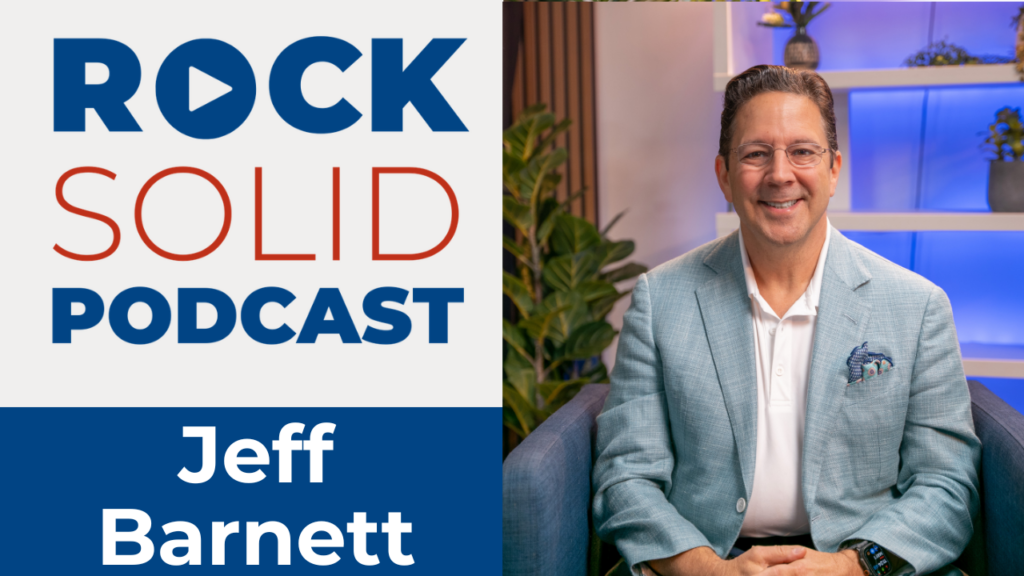
Jeff Barnett has heard the same sentence for thirty years, right after it is too late to fix it: I didn’t think we needed this yet. Sometimes it is a nineteen year old in a car accident, and the parents cannot speak to a doctor for their own kid because nobody signed a medical power of attorney. Sometimes it is a spouse who assumed being on the house deed together meant the home transfers automatically when one of them dies. It does not. Barnett has drafted the paperwork that would have prevented both, and thirty years in, he still watches families skip it.
Barnett co-founded Barnett & Leuty more than thirty years ago after coming home to Austin by way of Dallas and Joplin, Missouri, and law school at Drake University. He is also a fixture of the Round Rock arts scene, a habit his mother built in him with painting classes and museum trips long before he cared about a will. And he runs, a lot: 38 marathons and countless half marathons, plus more than 25 years coaching a local marathon training group all over Round Rock and Austin.
His biggest warning is not about money. It is about the gap between what you know and what you do not know you are missing. “The problem with documents that are done DIY is garbage in, garbage out,” he says, and he means it about doctors, engineers, and Realtors who deal with contracts every day, not just the average person filling out an online form. Leave out one word from a Texas will and the document can fail exactly when a family needs it most.
That warning lands harder here than almost anywhere else. Round Rock and Georgetown sit inside one of the largest concentrations of retirees in the country, and Barnett spends his days helping adult children figure out what their aging parents actually have in place before a diagnosis makes it complicated. Texas also runs one of the simplest probate processes in the country, which Barnett says is exactly why so many people assume they can skip planning altogether. They cannot.
If something happened to you tonight, does the person who would have to handle it know where to find a single document, or would they be starting from zero?
Key Takeaways From This Episode
- Every adult 18 and up needs two documents immediately: a medical power of attorney and a durable power of attorney. Not just retirees, not just parents. The moment a child turns 18, parents legally lose the automatic right to make decisions for them.
- A diagnosis does not disqualify you from planning: early dementia or a new diagnosis often still leaves enough time to sign documents. Waiting is the real disqualifier, not the diagnosis itself.
- Texas’s simple probate process is a trap, not a shortcut: because probate here is comparatively painless, many families assume they can skip planning entirely. It actually means most people do not need an expensive trust, not that they need nothing.
- Ask your parents four questions, not for their account numbers: do you have a will, who drafted it, when was it last updated, and where is it kept.
- Round Rock and Georgetown carry extra stakes: the area is one of the largest retirement destinations in the country, which makes this conversation less optional here than almost anywhere else.
The problem with documents that are done DIY is garbage in, garbage out.
Jeff Barnett, Barnett & Leuty
You don’t have to be a Rockefeller to decide to do some estate planning.
Jeff Barnett, Barnett & Leuty
Everybody from eighteen up needs a medical power of attorney and a durable power of attorney.
Jeff Barnett, Barnett & Leuty
Episode Chapters
- [00:00] Meeting at the Round Rock Art Center: How Bryan and Jeff actually met, through mutual friends and a shared love of Round Rock’s growing arts scene.
- [04:14] What Probate Looks Like Without a Plan: The real cost isn’t drama, it’s the time, expense, and complexity when nothing is in place.
- [05:16] You Don’t Need to Be a Rockefeller: The five basic documents almost every adult in Texas should have, starting at 18.
- [10:26] Why DIY Wills Fail: The dentist analogy, and why smart, capable professionals still leave out the one word that matters.
- [11:54] The Conversation Adult Kids Avoid: What to actually ask aging parents, and why it isn’t about seeing their bank account.
- [14:04] A Diagnosis Isn’t a Deadline, Waiting Is: What families should do the moment a parent gets an early diagnosis.
- [21:06] The One Mistake Jeff Sees Most: And why he keeps saying it even though it doesn’t put more clients in his office.
- [23:46] 38 Marathons and Counting: What three decades of long-distance running taught Jeff about building a law practice on trust.
Frequently Asked Questions
Does everyone need a will in Texas?
Yes, according to Jeff Barnett of Barnett & Leuty. Every adult should have at least the basic five documents: a will, a medical power of attorney, a durable power of attorney, a directive to physicians, and an agent for disposition of remains. You do not need significant wealth to need a plan.
Do I need a trust or just a will?
Not necessarily. Barnett says Texas has one of the simplest, most streamlined probate processes in the country, so many people who assume they need a trust do not. He customizes the recommendation to each family’s specific situation instead of defaulting to a trust for everyone.
What documents does an 18-year-old need?
A medical power of attorney and a durable power of attorney, according to Barnett. Once a child turns 18, parents legally lose the automatic right to make medical or financial decisions on their behalf, even in an emergency.
Can I write my own will using an online template or AI?
You can, but Barnett warns that DIY documents fail from what you don’t know you don’t know. A single missing word can invalidate a provision in Texas, and even professionals like doctors, engineers, and Realtors who work with contracts regularly still miss nuances a specialized estate attorney would catch.
What should adult children ask their aging parents about estate planning?
Barnett recommends asking whether they have a will, who drafted it, when it was last updated, and where it is kept, without asking to see financial details. He also says a diagnosis like early dementia does not automatically disqualify someone from updating their documents, but waiting does.
About Jeff Barnett
Jeff Barnett is a founding partner at Barnett & Leuty, PC in Round Rock, where he has practiced business and estate planning law for more than thirty years. He is a graduate of the University of Texas at Austin and Drake University Law School, a certified mediator, and a fixture of the Round Rock arts community. Outside the office, he has completed 38 marathons and coaches a local marathon training group he has led for more than 25 years.
Connect: LinkedIn | civil-law.com
More From Rock Solid
If this episode resonated, hear Grief, Resilience, and the Courage to Be Seen and The Round Rock Therapist Who Wants to Work Herself Out of a Job, both guests understand that the hardest family conversations are the ones worth having early. Browse all Rock Solid episodes.
Watch or Listen
Full Episode Transcript
Click to read the full transcript
Bryan: Welcome to Rock Solid, the Round Rock Business Leaders podcast. Hi everybody, it’s Bryan Eisenberg and welcome to Rock Solid. I’m joined today by my friend Jeff Barnett from Barnett & Leuty. Welcome.
Jeff: Thank you for having me.
Bryan: I’m so excited to finally get the chance to sit down with you, because I’ve known about you for years. I’ve interacted with you on Facebook the last couple of years, with the parenting aging parents group that got started by Austin natives Kim and Mike Barnes. And more importantly, my wife has spoken so highly about you and your team, and of course we share a mutual friend, VC Spear. Shout out to her. And we randomly ran into each other at something you’re very passionate about, the art center here in Round Rock that just opened. Can you tell me what got you into supporting the arts? I want to go into what you do, but that was so fascinating to meet you there, of all places, you and your family as well.
Jeff: Sure. You met my mom. She has always been into the arts and very passionate about them. She painted a lot when she was young. She took me to plays, to museums, and other places where art is showcased, and it’s always been something ingrained in my DNA. While I’m not a huge artist myself, I don’t paint, I don’t sketch, I don’t draw, well, I can do those things, but I’m not great at them. She’s the one who can really do that, but I do appreciate it all. And I love music. I played piano when I was young, but I don’t play now. I don’t play any other instruments, but boy do I appreciate good music. I love going to see concerts, whether they’re giant names or just local artists we go see regularly.
Bryan: Austin’s known as the music capital of the world, but there’s something special happening at Round Rock too, and why you support that. A lot of people don’t get out to those events. What do you think would surprise them most about both the art center and Music on Main?
Jeff: Just how much Round Rock really embraces all of that. They’ve been named, I forget the exact designation, a music-supportive city, and everybody thinks, oh, that’s just Austin. But Round Rock really does foster that. They’ve been doing Music on Main for many years, and it’s not just the bigger Wednesday concerts, they do these Parklet shows throughout the week for lunch.
Bryan: And now the new amphitheater as well.
Jeff: That’s going to be really amazing. I can’t wait to go see some stuff there. And now they’ve got this stunning art center, and they’ve had some neat things and enormous plans coming up. I can’t always talk about all of it, but they’ve got some really cool things in the works.
Bryan: We did talk to the mayor about the Chihuly that’s coming. But that’s public, and just to see the floating rotations, it’s great. If you haven’t been there, you need to stop by. It’s right underneath the chamber offices. But that’s not why we’re here today, because I wanted to tap into your zone of genius, something you’re super well respected and well known for, and something a lot of people feel very uncomfortable talking about: estate planning, wills, power of attorney, and all those decisions. I want to start with, what does it look like for those who have not estate planned in Texas versus those who have? I’m talking about the full picture.
Jeff: It gets ugly, and it’s not just ugly because maybe there are contests. That’s actually pretty rare, and even when they crop up, they’re usually not successful. What really gets ugly is the cost, the magnitude, the length of time, and the complexity. That’s the part that people really get messed over on if they don’t have a plan, if they don’t have stuff in place. And it doesn’t have to involve expensive stuff. You don’t have to be a Rockefeller to decide to do some estate planning. Everybody from age 25 on up ought to have just the basic five documents, as my law partner and I always talk about. And some people need more. Eighteen-year-olds, every 18-year-old needs a medical power of attorney and a durable power of attorney, because mom and dad, although they don’t realize it yet until their 19-year-old kid has been in an accident and can’t speak for them, everybody 18 and up needs a medical power of attorney and a durable power of attorney. Those are the first two. And then once they begin to have some means, a couple of nickels to rub together, a will, and even as you age and begin to accumulate wealth, it doesn’t require having a trust. There’s a lot of language out there about get a trust, get a trust, and it is absolutely the right solution for some people and some situations. It is not for everybody. One of the great things about sitting down with people and talking with them about these things is we explore what their situation is and customize the solution that’s right for them. The way I was taught and thought about it for many years is, if you’ve got kids, you absolutely have to have something in place. If you own a business, whether big or not, you still want to have it in place. And of course, if you’re married, if it ends up having to go to probate, what does that look like for a family?
Bryan: Let me hit that little piece you said, if you’re married, because that’s something people miss. People think because they’re on the deed with their spouse, that they’re just going to receive it when that person dies, and we don’t need a will for that.
Jeff: Why would we? That’s not necessarily true. You do need a will or some kind of instrument, maybe a Lady Bird deed for a house. You can do a trust, but again, it’s not always necessary. So it’s very important to have the right set of documents for you. For most people, you kind of have the basic five documents: a will, a medical power of attorney, a durable power of attorney, which is basically everything non-medical, finances, real property, legal matters, insurance companies, government, whatever, and a directive to physicians, or sometimes called a living will or an advance directive, that’s the pull-the-plug document. And then the agent for disposition of remains. Those are the essential five. And then for a lot of people, if they do have a homestead, then a Lady Bird deed is an excellent tool to transfer real estate at death without the need for probate. And then again, we kind of go from there with certain people and situations depending on their needs and their particular circumstances. Some people need a trust, some don’t.
Bryan: You’ve been doing this for what, nearly 30 years?
Jeff: Over 30 years.
Bryan: It gets really ugly if you don’t have a will, because I mentioned earlier that the process is lengthy, complicated, and expensive. It can drag on for a couple of years.
Jeff: It can. So a spouse who might be waiting for the assets to be able to live their daily life could be frozen in probate for a couple of years. It can absolutely, depending on the situation, and whether there are blended families, his and hers and ours, or maybe just his and hers with the kids. If all the kids are of the marriage, most community property often goes to the surviving spouse, but it’s still a lengthy and complicated process to get there, even without a will. But if there are kids involved who are not of the current marriage, that throws a wrench in things, and your surviving spouse doesn’t always get it, or your kids don’t always get it exactly where or the way you want it. So it makes a difference to plan and to plot it out and figure it out.
Bryan: So to me, there’s a lot of nuance here. I imagine a lot of people think, okay, I can go online now, get a will, get all these documents, and just fill those out. What’s the failure point for the person who thinks, yeah, that’s okay, I can probably do that, and where does it fall apart?
Jeff: I always use the analogy that I would never do my own dental work. I’m not a trained dentist. I’m not going to go out to the garage when I’ve got a cavity and pull out the drill and do my own root canal. Same thing, and people think, gee, I speak English, I write English, I ought to understand how to do a will, and you can throw together something, you can even use AI or something like that. But the problem is that you don’t know what you don’t know. And the problem with documents that are done DIY is garbage in, garbage out. It’s not that very intelligent people, doctors, engineers, architects, even CPAs, Realtors who deal with contracts on a regular basis, will miss nuances that need to be in a will in Texas that they just didn’t know about. So they’ll leave out a word, and that word makes a huge difference in what probate looks like, or in maybe not even having to do probate.
Bryan: One of the main reasons I wanted to have this conversation with you is because we’re of that age, of course, both my parents have passed, but you have parents, and we’re in that generation of people taking care of their parents, or worried about taking care of their parents as they’re aging, hence the parenting aging parents group we talked about. What does an adult child need to worry about and think about for their parents, and maybe that 25-year-old kid who’s seeing their parents just starting to age, what should they be concerned about that their parents have in place so that everything is okay?
Jeff: They need to ask the questions. It’s an uncomfortable question. You don’t want to ask your parents, do you have a will? First of all, they’re going to think I think they’re dying, or they don’t like to talk about these things, or they’re going to think I’m after their money. You need to have the conversation. It doesn’t need to be detailed, it doesn’t need to be I want a copy of everything, I need to be on your bank accounts. It does need to be, do you have a will, who drafted it, did you have a lawyer, do you have a medical power of attorney, when was the last time it was updated, where is it, is it under the bed, is it in a filing cabinet, is it in a safe deposit box, how do I find it if I need it. Those are the things you need to have that conversation about early, when you’re a young adult with your parents, and obviously in middle age with your older parents. And don’t forget, while you’re asking about theirs, be sure to think about your own as well.
Bryan: Obviously, because we own a home care agency, we see this a lot. Oftentimes we get families where the parents are starting to have dementia or may have gone through a quick decline, and maybe they didn’t get all their paperwork in order. How do they handle that? What should they be asking, what should they be looking for?
Jeff: That is one of the worst mistakes people make, they wait too long to get this done. They always think they’ve got more time, and not everybody has more time. There are 25-year-olds who die in automobile accidents or brain aneurysms every day, 35, 45, 50, 55. Obviously the chance of dying at 65, 75, 85 is much higher than at 25 or 35, but it happens all the time. So you don’t want to wait. And if you end up in a situation where a parent has a diagnosis, that’s not automatically something that disqualifies them from getting those things done. So if they have the early diagnosis, go ahead and get your hands on the documents, make sure the people named ten years ago in their will are still in their lives, are still a part of it, make sure everything is done right, because you still probably have a little bit of time if it’s early in the diagnosis, they may have some forgetfulness, but they definitely probably still have the level of competency that allows you to get those documents done. So definitely get those documents done or get them checked at that point. And then once somebody gets on in their diagnosis and they have dementia or whatever, go talk to a lawyer about how to begin to work under those things. Under a power of attorney there are duties that you owe to the person you’re the agent for, so you’ve got to make sure you exercise those duties properly. The other big one we see happen often, and this is why VC has been so helpful for many years answering these questions, is in order for people to go to assisted living communities or nursing homes, they have this spend-down because of all their assets, and how to protect those, and we talked about trusts and all of that. Oftentimes there are a lot of mistakes made there.
Bryan: Again, how do we help people understand that path so they don’t get into that crisis mode, where sure we’ve got assets, they had a home and they moved to assisted living, and that will hasn’t been updated? Lots of messy stuff can happen.
Jeff: The Medicaid piece of elder law and estate planning is not specifically my area, but I’ve heard my law partner and VC give that talk so many times, I can talk about it, and what it really means is there’s kind of this misconception out there, like I said, about couples, there’s a misconception that I need to spend it down, and you don’t always have to. In many cases you don’t, especially if you’ve got time, when somebody is still competent, or if you have the right kind of power of attorney. There are ways to set up estate planning packages where you do a Medicaid asset protection trust, you take the money out in the right way, and move it through a couple of different vehicles, and it ends up coming out clean on the other side, and you don’t have to spend it down. Again, I don’t get into the details because that’s not my specific area, but my law partner, VC, and a financial planner they work with, they are a team and they know exactly how to get that done and preserve as much of the estate and the legacy as possible.
Bryan: I just wanted that high level. I know I’ll have to get VC on the podcast one of these days, because her story and background are fascinating. But I think, especially here for the Round Rock and Central Texas community, we’re a very family-oriented community, and we’ve got great support, especially if you think about Georgetown and Sun City, one of the largest areas for aging in the country. I also find it fascinating, Georgetown is a college town, yet it’s also the largest senior community around as well. I can’t think of any other places in the country other than maybe Arizona that are similar. But that also brings both pros and cons in terms of the resources out there. You’ve worked with so many families, what are some of the big things they should be aware of that they can plug into in the community to make sure that journey for their aging parents is clear? Even yourself, right, because your parents are not young. How are you thinking about how to plug them into all those resources?
Jeff: I have a tremendous network of professionals I work with on a regular, daily basis, so I have some of that knowledge of, okay, for retrofitting your home for safety, or making sure you have the right docs and all that, I know I have all of that, the CPAs, the financial planners, that whole picture. But one of the things I’d say to people is, if you don’t have that network yourself, plug into somebody who does, because talking to someone like me, someone like VC, someone like you, or my wife, not me, she’s really the expert, they can get you connected with everybody. There’s a lot of people who are aging solo, more and more so every day, and they don’t really have family or close family, so they’ll come see me and say, I don’t know who to put on my medical power of attorney to make decisions for me, is there somebody who can do that, I don’t know who to put on my financial power of attorney, I don’t know who to trust, I’ve got a very small group of family or friends, or sometimes it’s just like, they’re 95, they’ve outlived everybody, even some of their kids. So yes, there are professionals in place who do those things, and we can plug you into those people.
Bryan: If we were to wrap up, for everyone who thought they needed to get a will but still haven’t pulled the trigger, what are the top mistakes you see them make on such a regular basis that you wish you could tell them, hey, just don’t do that? What would you tell them?
Jeff: DIY. DIY is number one. And that’s not because I need your money, I am busy, I always need clients, I always will love clients and new clients, but I’m not preaching this because I want everybody to come to me. I’m preaching this because I know the law, and I know how complicated things can get, and how messy things can get if you use a wrong phrase or a wrong word or don’t have something done correctly. So go see somebody and get it done by a professional. That’s probably the single biggest thing I see people do that’s wrong. And I guess all of the things that accompany that, using the wrong language in documents, misunderstanding things, reading stuff on the internet that isn’t necessarily applicable in Texas. There’s a lot of stuff out there that applies elsewhere and doesn’t apply here.
Bryan: Are there things that even apply at the county level?
Jeff: Nothing that specifically comes to mind, but one of the things, Texas-wise, is that Texas has one of the easiest, most streamlined probate processes in the country. And it’s actually one of the reasons why everybody who comes to my office doesn’t walk out with a trust, because probate here is not the big ugly monster that it is in some places. If I were an attorney in California or Massachusetts or New York, those states have complicated, lengthy, expensive probate processes, and everybody who came into my office would leave with a trust. Not so here, because it’s not so bad. Again, it all depends on the person and their situation. But yeah, at the state level, that’s one of the things that’s a big misconception too, and it’s something people get wrong.
Bryan: I know, as one of your passions, you’re a runner, and I’m curious, both entrepreneurism and estate planning are about the marathon of life.
Jeff: Yes, it’s not a sprint.
Bryan: We’ll come a little bit to the local level, where do you run here in Round Rock? What are your favorite areas to get your running in?
Jeff: I love the Brushy Creek Trail. I live on the east side, so I hit that side, but I do connect over to the other side. I do go into Austin, sometimes out to the far west by Cedar Park. I run all over town. I’m a marathoner, I’ve done 38 marathons and countless half marathons. I’m also a coach, and as a coach in a marathon training program, we do runs all over town, West Austin, East Austin, Round Rock, all over.
Bryan: 38 marathons is significant. I know friends who’ve run a handful, 38 is a lot. What got you so inspired to run so many marathons?
Jeff: I began running casually in high school. I was not on the track team, I was nothing special, I’m still nothing special when it comes to speed, but you can wind me up and I can go forever. That’s my superpower, not speed, stamina. I started when I was young and continued in college, and while I was in college is where I developed the thought that one day I’ll run a marathon. I went on to law school, didn’t run a lot while I was there, didn’t have a lot of time, and it was also very cold up in Iowa at the time. When I got back here, I found a marathon training group, did my first one with them, and then began coaching with them, and I’ve been doing it for over 25 years.
Bryan: I think that’s contributed a lot to your success and the success of your firm, having that mentality that life is not just a sprint, it’s a marathon, you can get past the short-term thing. And you’ve lived here in Round Rock, which has also had that philosophy in terms of governance and growth.
Jeff: They have such a great long vision here. They planned, you know, the whole water thing, the arts, they are not shortsighted here. They don’t just worry about today. They are always looking forward, and that’s one of the fantastic things about living here in Round Rock.
Bryan: I would have to agree. Jeff, thank you so much for your time today. I know we could spend hours having conversations about this, but if people have questions for you, maybe they need to start thinking about getting their will and other documents in place, or maybe they have teenage kids who are driving around and need to get that done, what’s the best way for them to get in touch with you?
Jeff: We do have a website, civil-law.com. And I do have email, jbarnett at civil-law.com. Our office, they can always call as well, and we’re happy to sit down and have a conversation. Our consultations are free, so you don’t have to worry about the clock already ticking the second you walk in the door or pick up the phone. We’re happy to sit down with people, and of course they can see me in the community, the same way I ran into you.
Bryan: Others will. Thank you so much for your time today.
Jeff: All right, thank you for having me.